Lookalikes to rule out
Meadow Mushroom
deadlyMeadow mushroom gills mature pink to chocolate brown, its spores are brown, and its base has no volva.
Paddy Straw Mushroom
deadlyVolvariella also has a volva but develops pink spores and lacks a stem ring; confusion has caused fatal poisonings.
Green Russula species
deadlyRussulas have brittle flesh and no ring or volva, but cap color alone can overlap.
Identification
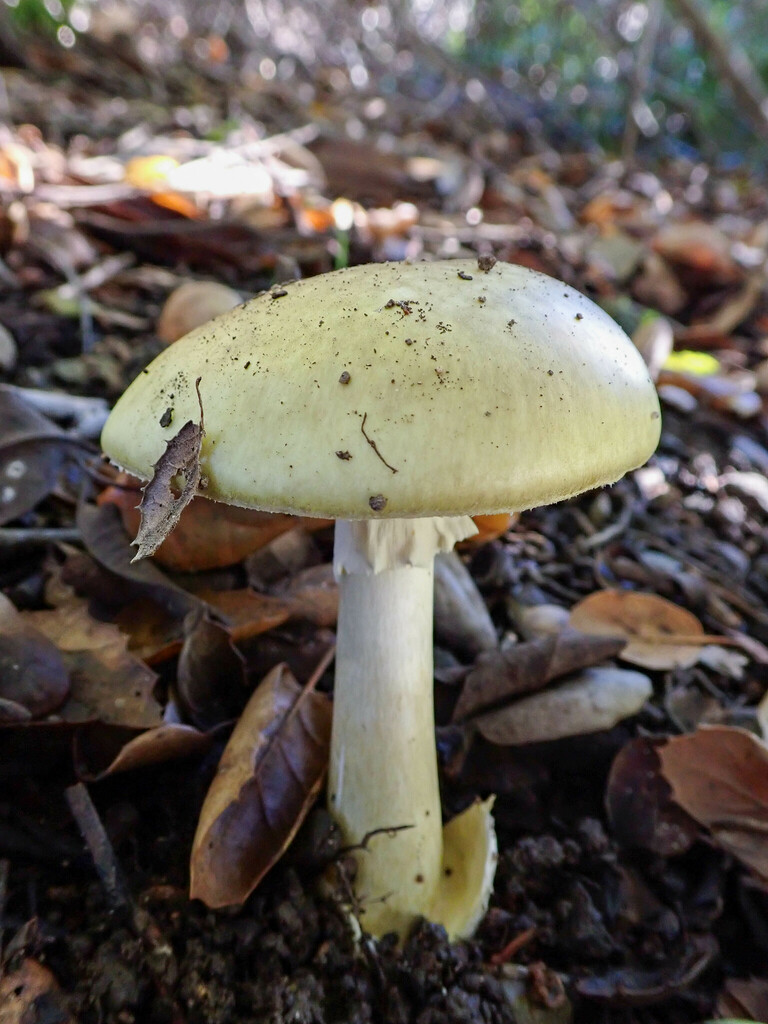
Cap color ranges from olive green and bronze to yellowish or nearly white, so never rely on green. The gills remain white and free from the stem. A skirt-like ring usually hangs from the upper stem, and a membranous white volva forms a sack around the base. That volva is often buried and can tear away if the mushroom is pulled carelessly.
Young buttons may conceal all of these structures. Cut one vertically only for study; the internal cap, gills, and stem distinguish it from uniform puffball flesh.
Why it matters
Death caps contain amatoxins that survive cooking, freezing, and drying. Symptoms often wait 6 to 24 hours, followed by severe vomiting and diarrhea, apparent improvement, then liver and kidney failure. Early emergency consultation matters before illness appears.
The species is native to Europe and parts of Eurasia and has been introduced with host trees to regions including western North America, South America, southern Africa, and Australia.
Memorable fact
A pleasant taste offers no warning; amatoxin mushrooms can be deadly without tasting bitter or unusual.