Choice edible
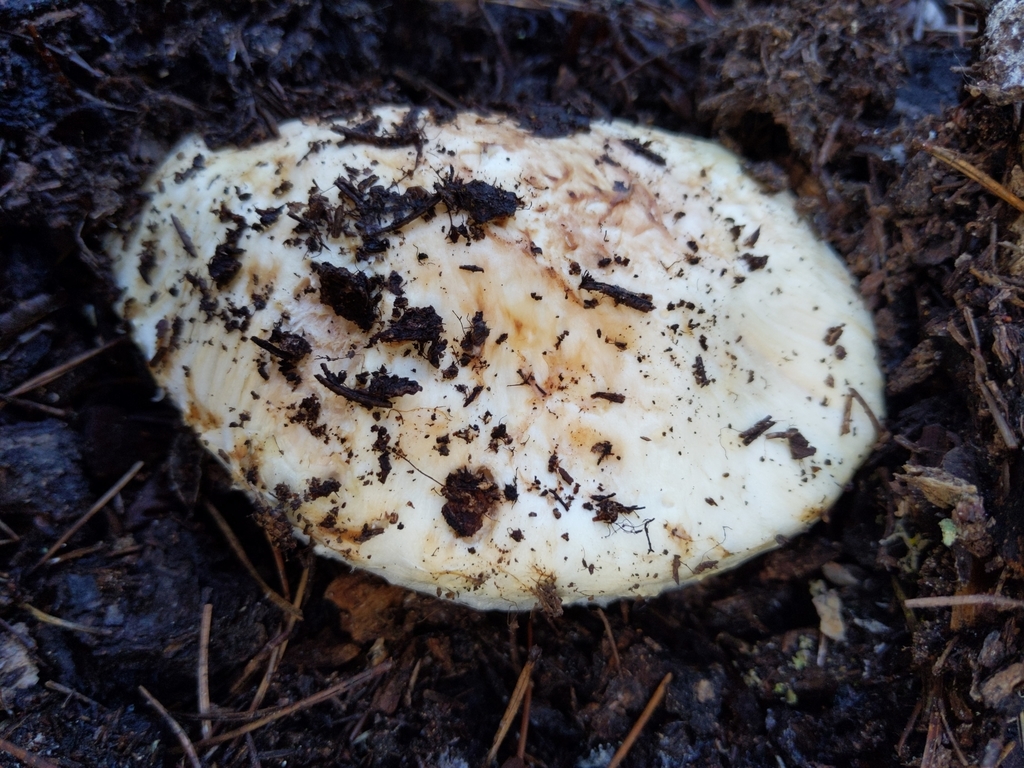
Morel
Morchella esculenta
A spring mushroom recognized by a pitted cap and a single hollow interior, with dangerous false-morel confusion to rule out.
Study field marks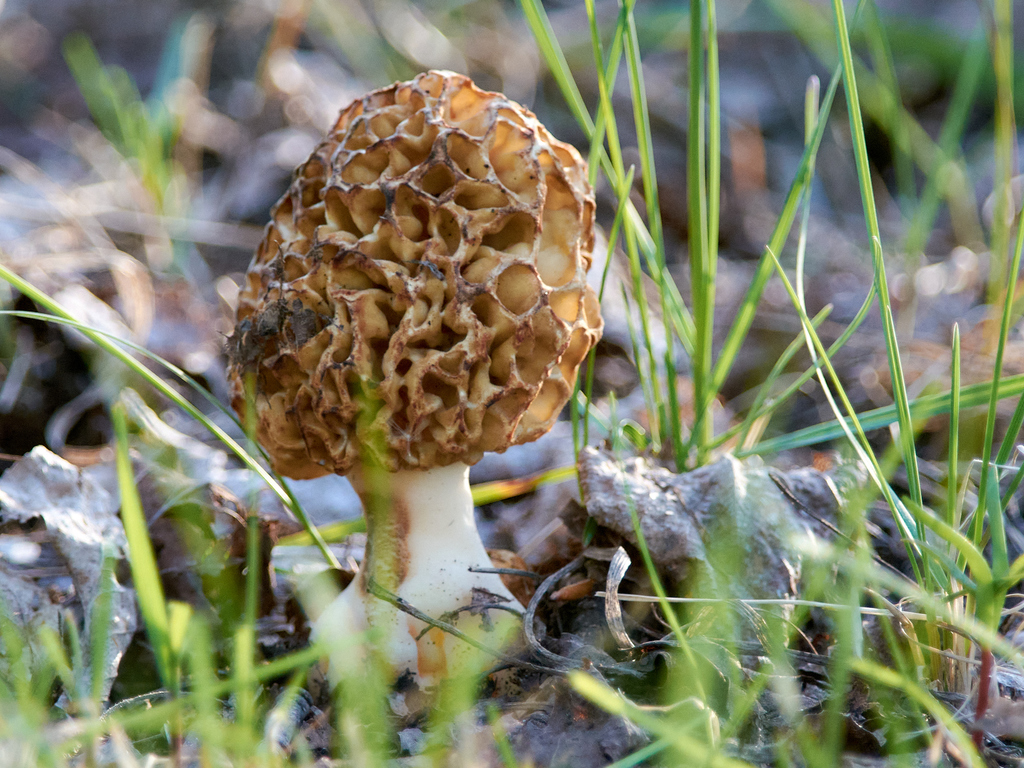
Field collection · 30 species
Field marks, dangerous lookalike checks, cited safety notes, and recent reviewed observations for the map's current species.
Current catalogue
These pages teach what to examine. They cannot confirm edibility.
Morchella esculenta
A spring mushroom recognized by a pitted cap and a single hollow interior, with dangerous false-morel confusion to rule out.
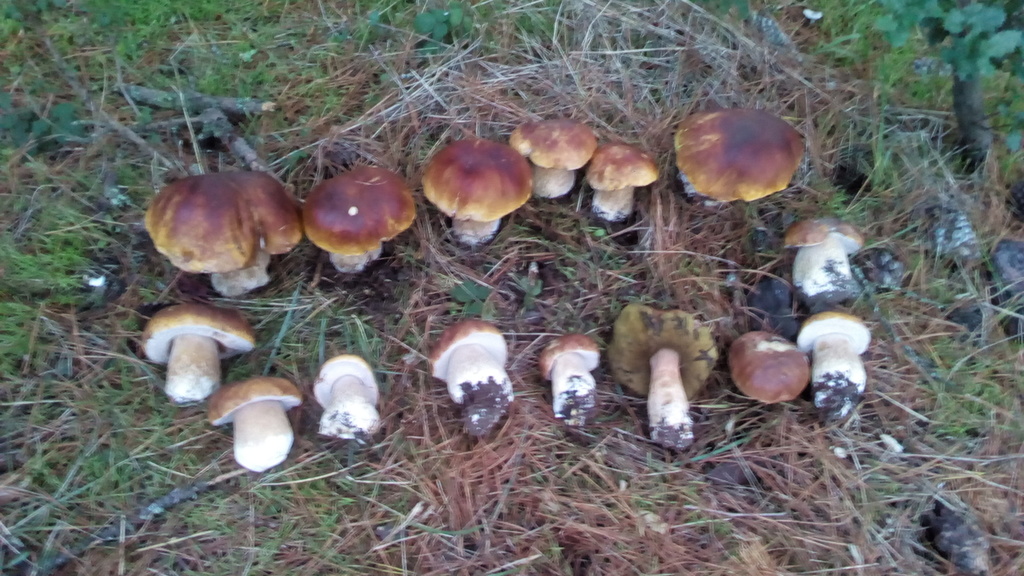
Study field marksBoletus edulis
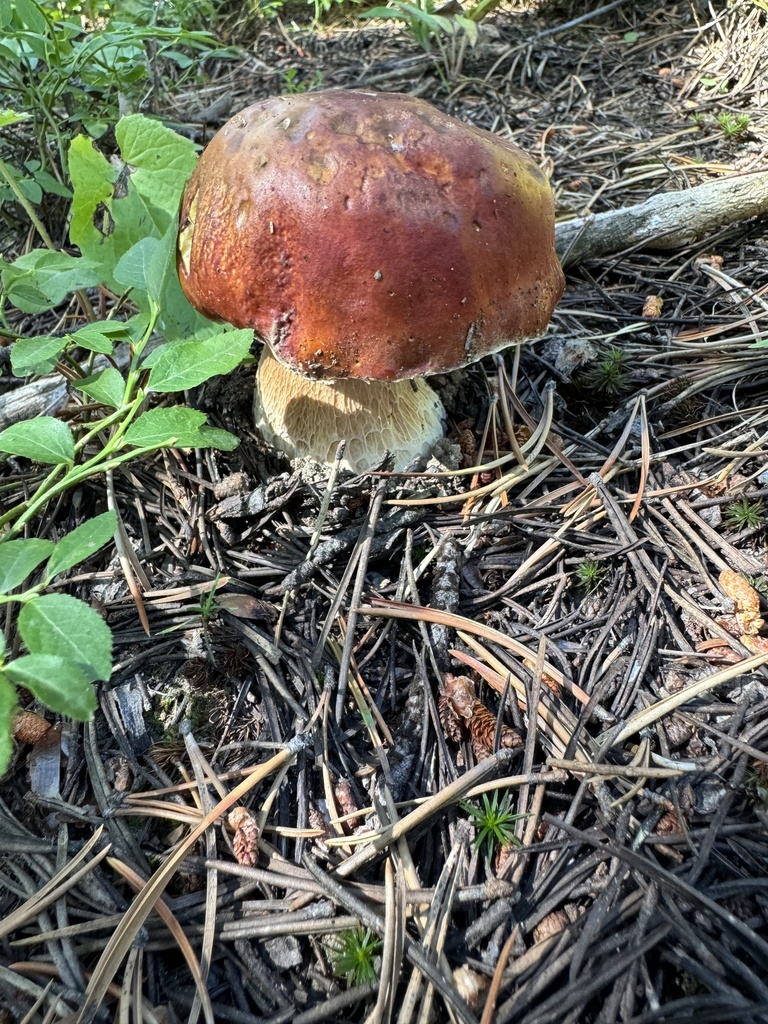
A stout, brown-capped bolete with pale pores and fine white netting on the upper stem.
Study field marksCantharellus roseocanus
A western chanterelle with blunt forked ridges, solid pale flesh, and a young pinkish cap bloom.
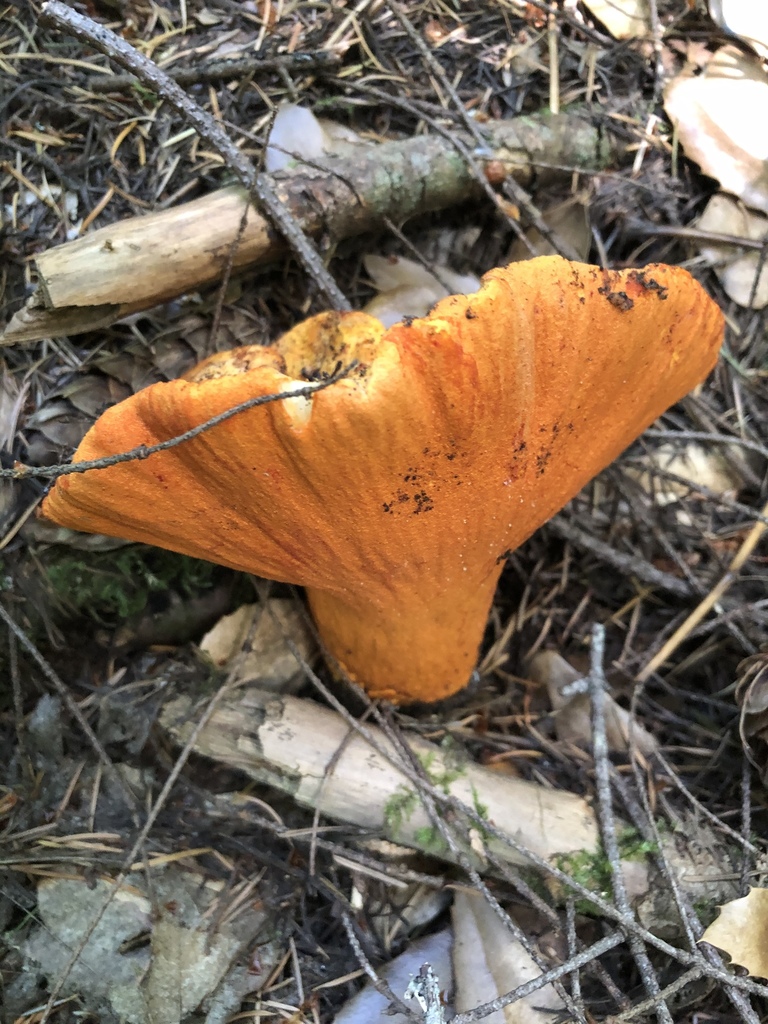
Study field marksHypomyces lactifluorum
A firm host mushroom transformed by a red-orange parasitic fungus that erases most of the original gills.
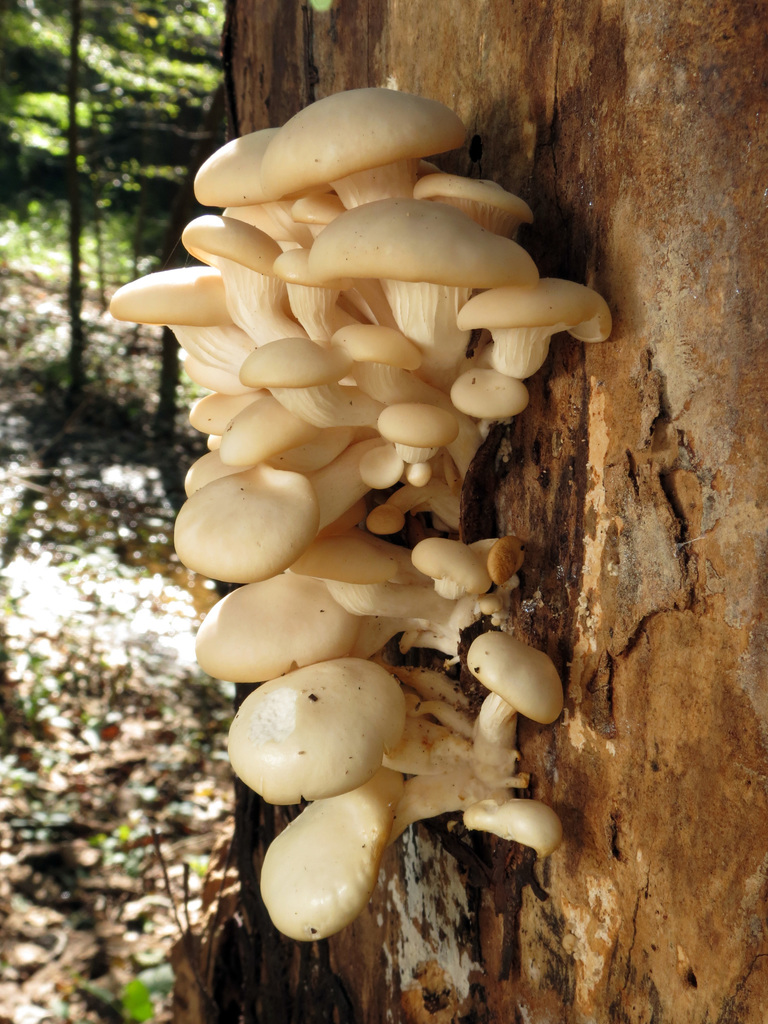
Study field marksPleurotus ostreatus
Pale fan-shaped caps growing in shelves on wood, with gills descending a short off-center stem.
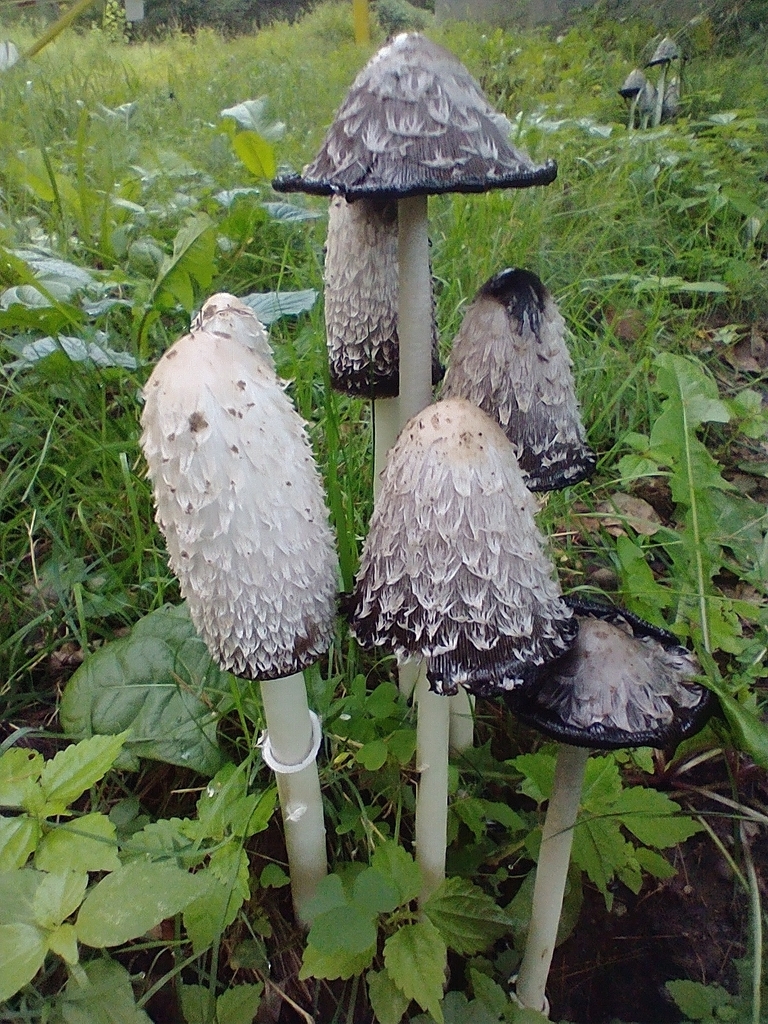
Study field marksCoprinus comatus
A tall white ink cap whose shaggy cylinder dissolves from the rim into black liquid as it matures.
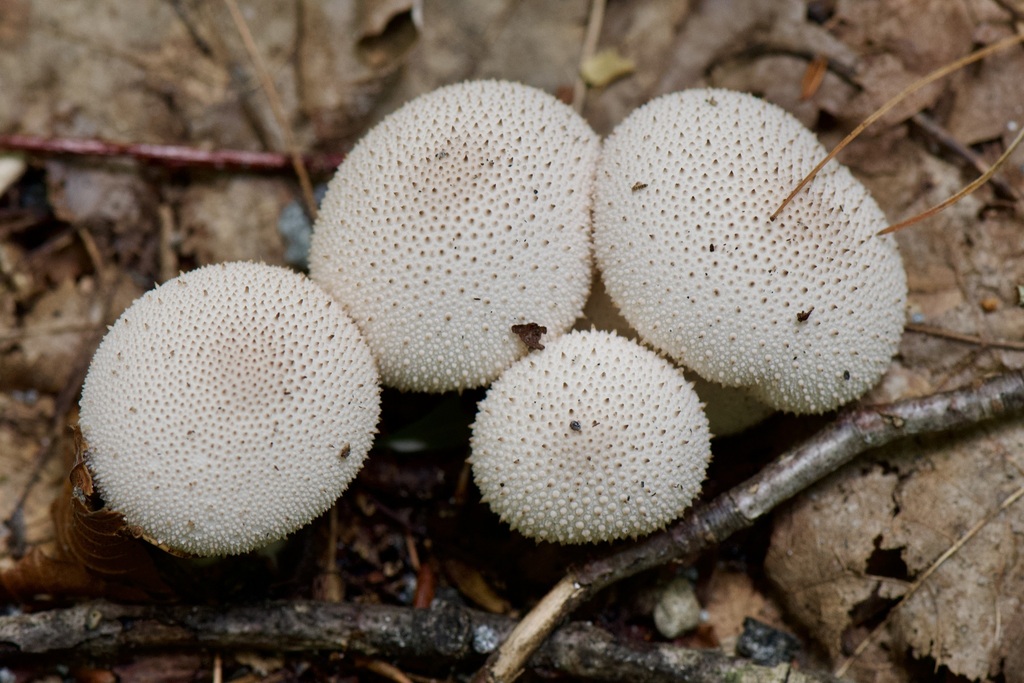
Study field marksLycoperdon perlatum
A pear-shaped puffball with detachable cone-shaped spines and a mandatory pure-white slice test.
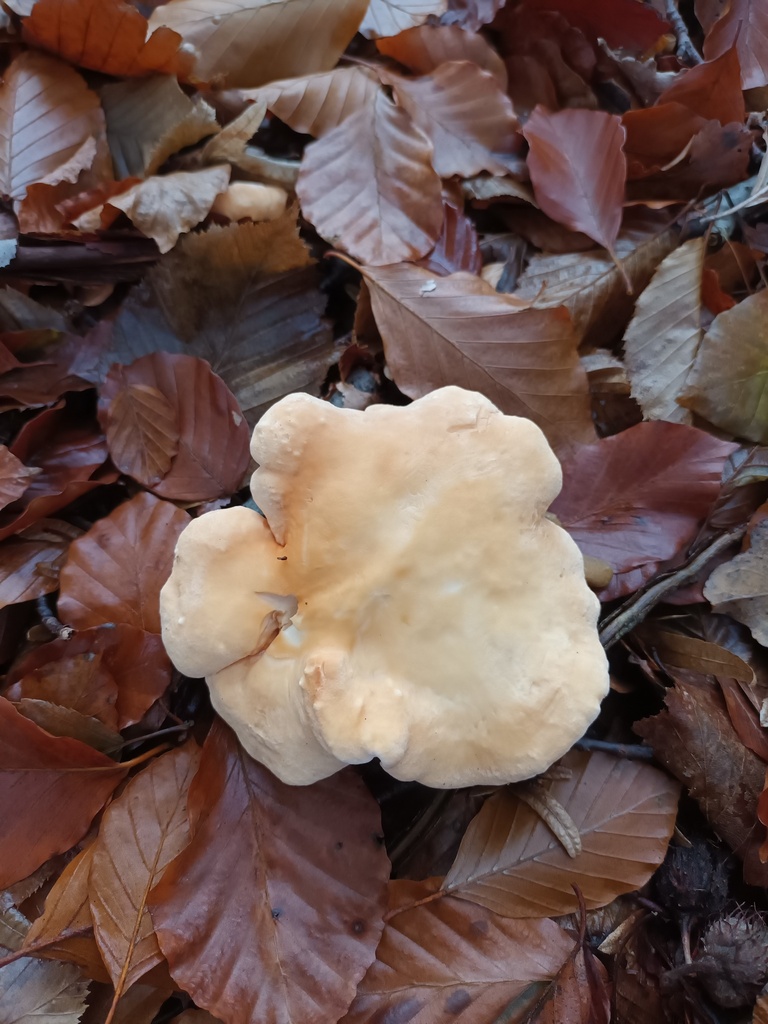
Study field marksHydnum repandum
A woodland mushroom with soft detachable teeth under the cap instead of gills or pores.
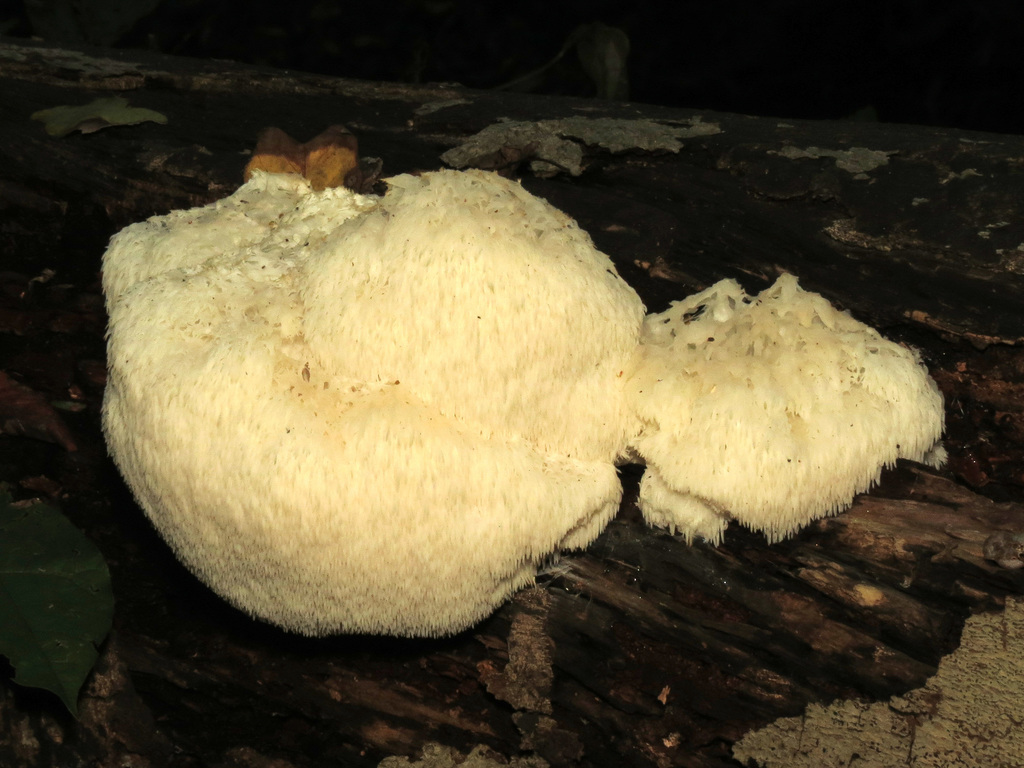
Study field marksHericium erinaceus
A white hardwood fungus formed from one cushion of long dangling teeth, without a cap, gills, or stem.
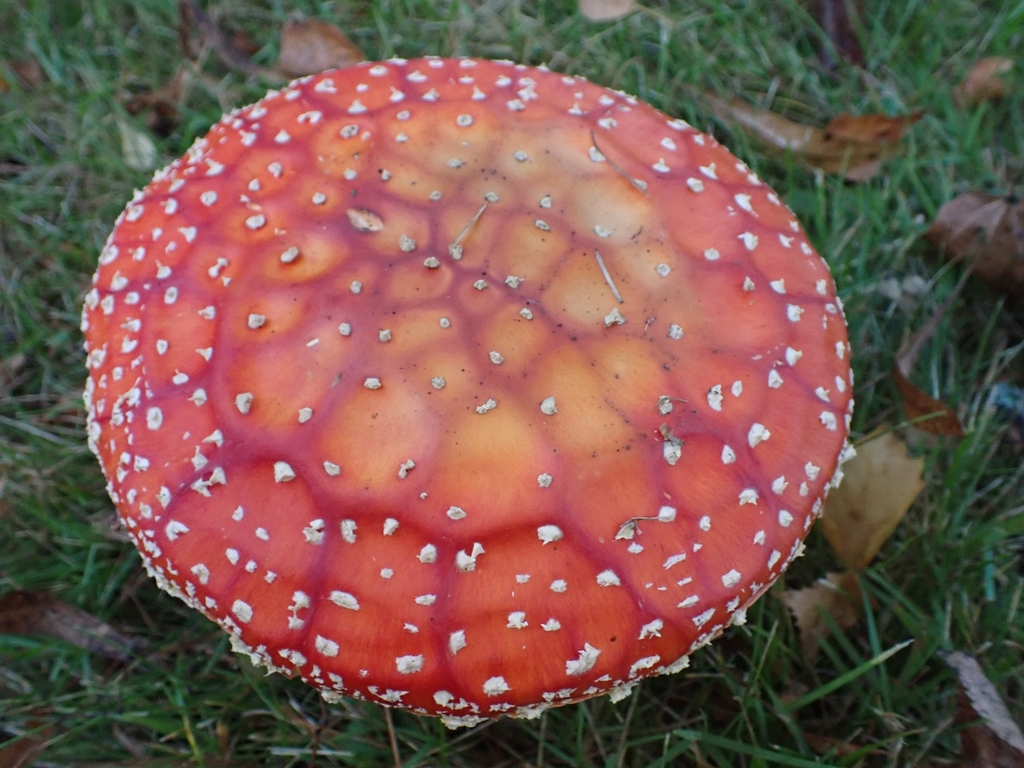
Study field marksAmanita muscaria
The iconic red or yellow Amanita with white veil warts, white gills, a ring, and a bulbous base marked by scaly rings.
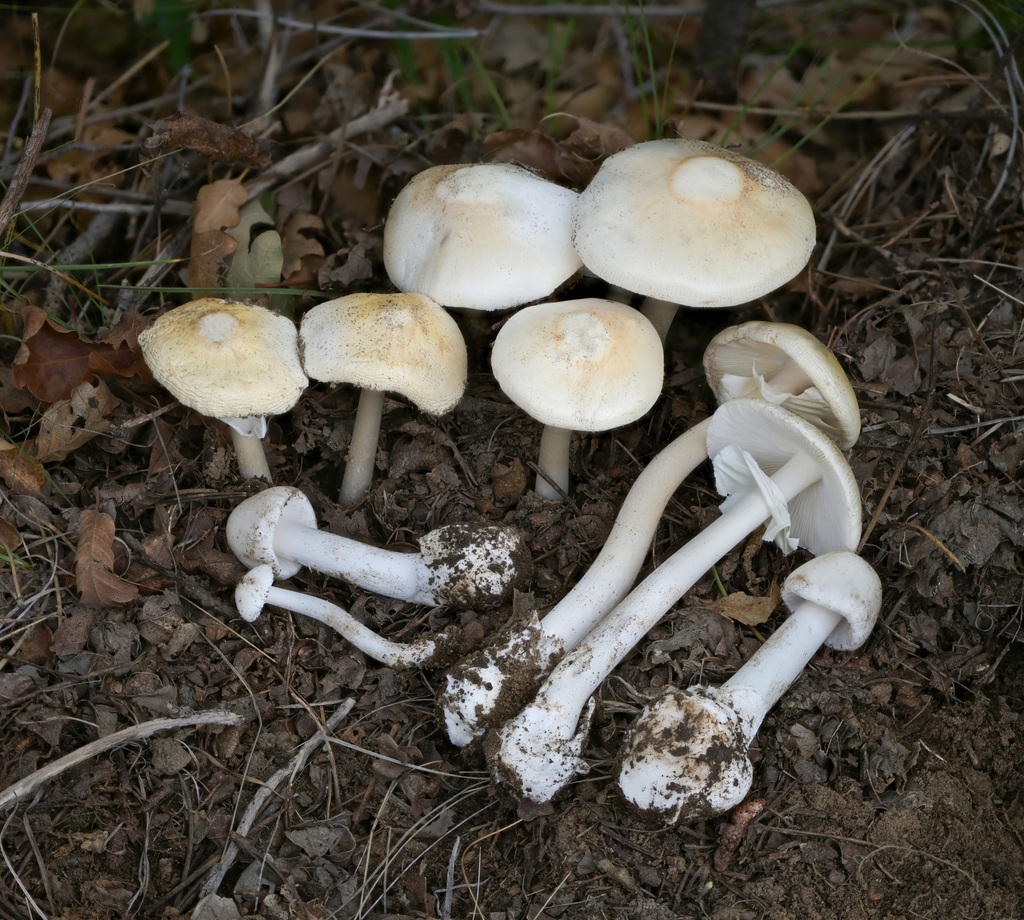
Study field marksAmanita bisporigera
A deadly white Amanita pattern defined by free white gills, a ring, white spores, and a buried sack-like volva.
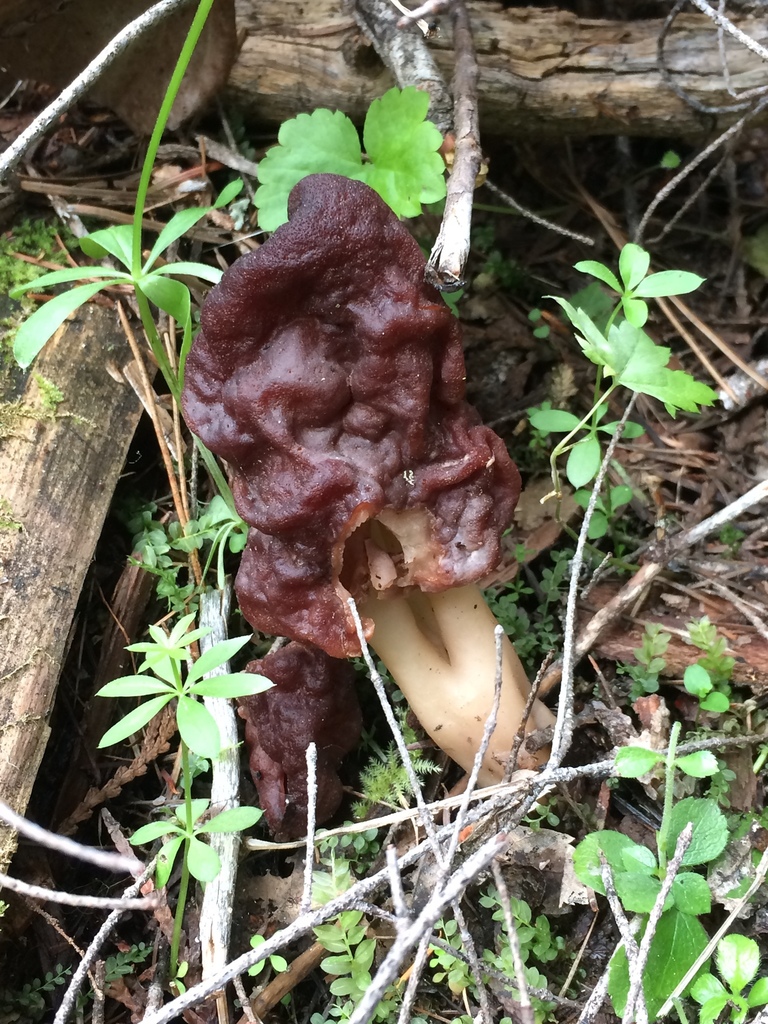
Study field marksGyromitra esculenta
A spring mushroom with brain-like folds and a chambered interior that overlaps true-morel habitat and can cause severe poisoning.
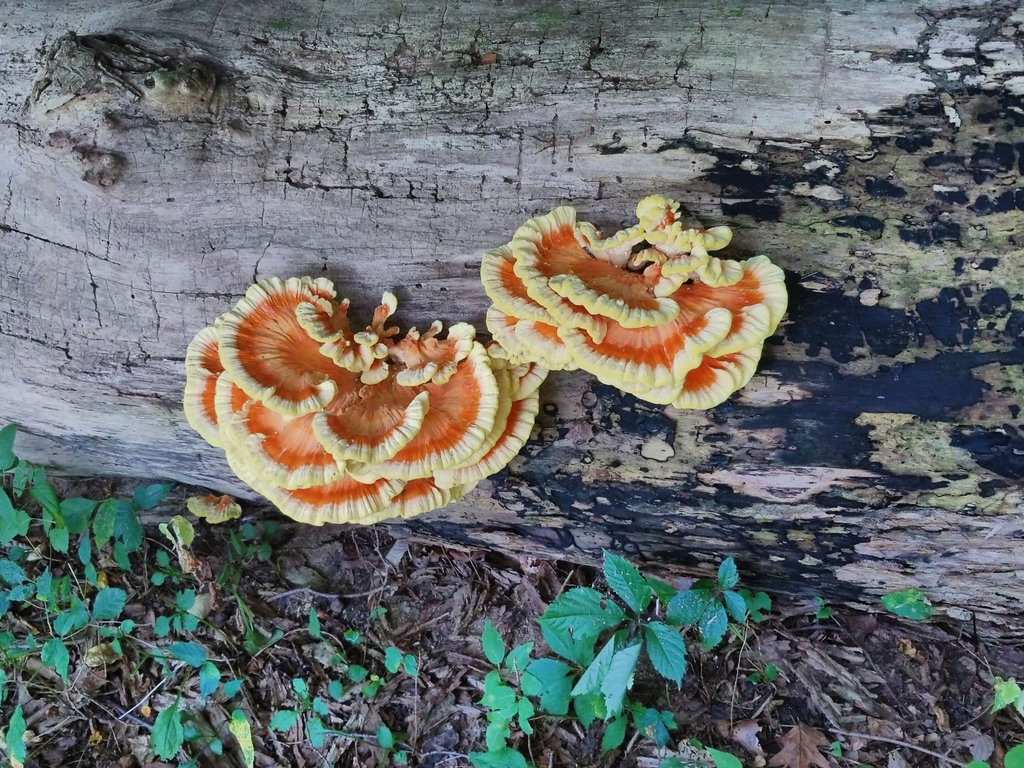
Study field marksLaetiporus sulphureus
Bright orange and yellow shelves on wood, with a sulfur-yellow pore surface and no gills.
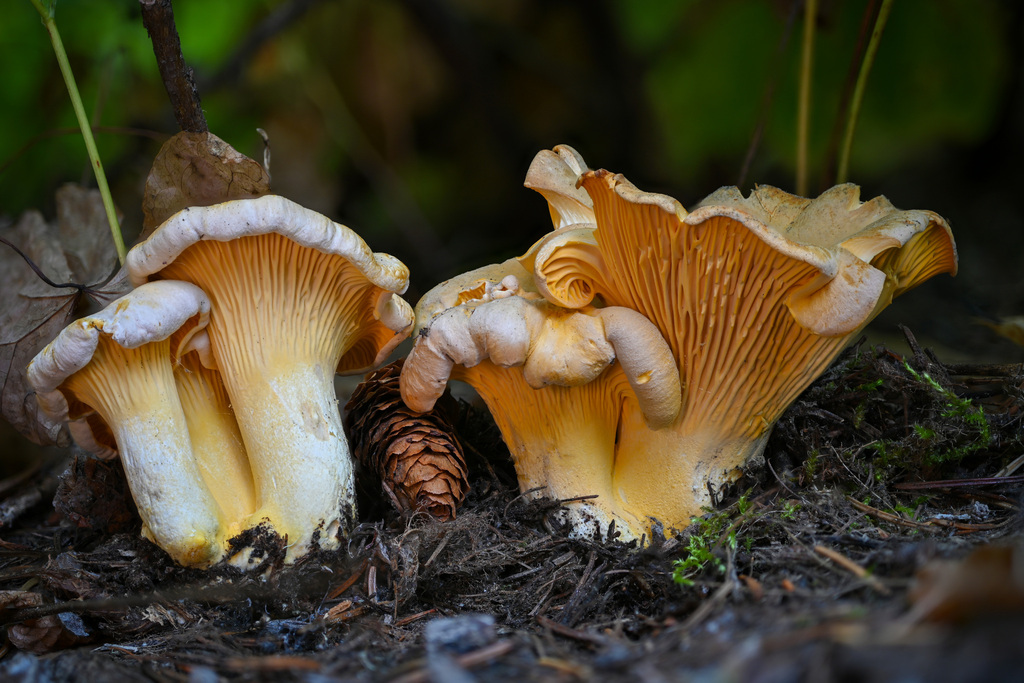
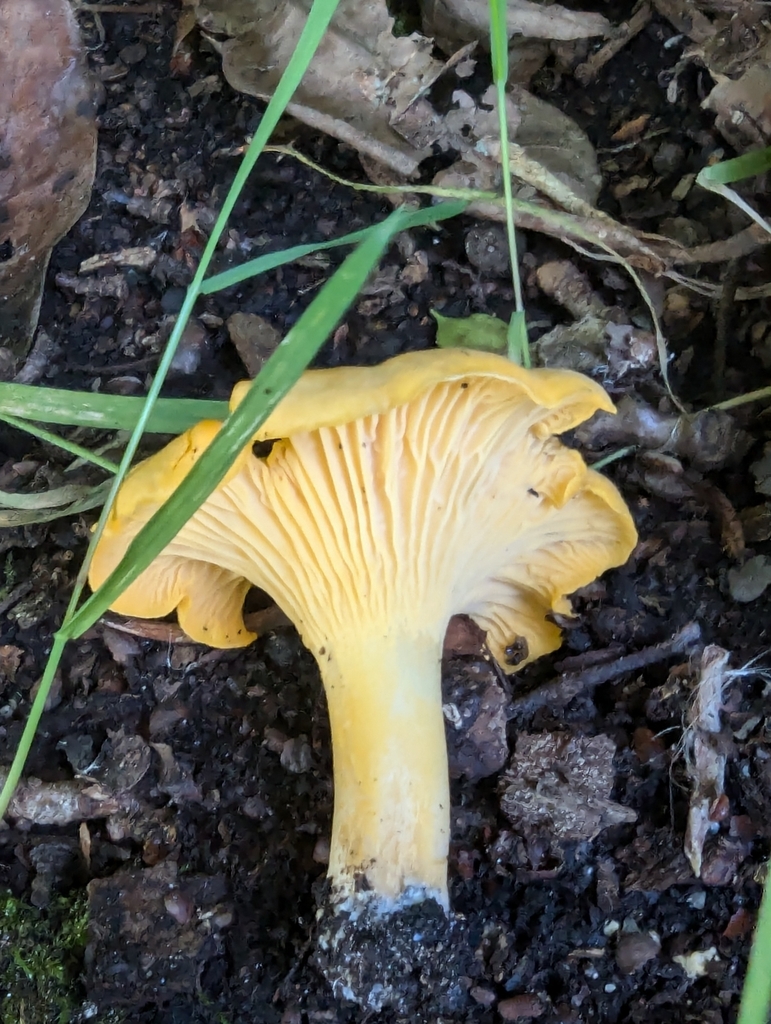
Study field marksCantharellus cibarius
A golden woodland chanterelle with blunt forked ridges, solid pale flesh, and no true gill blades.
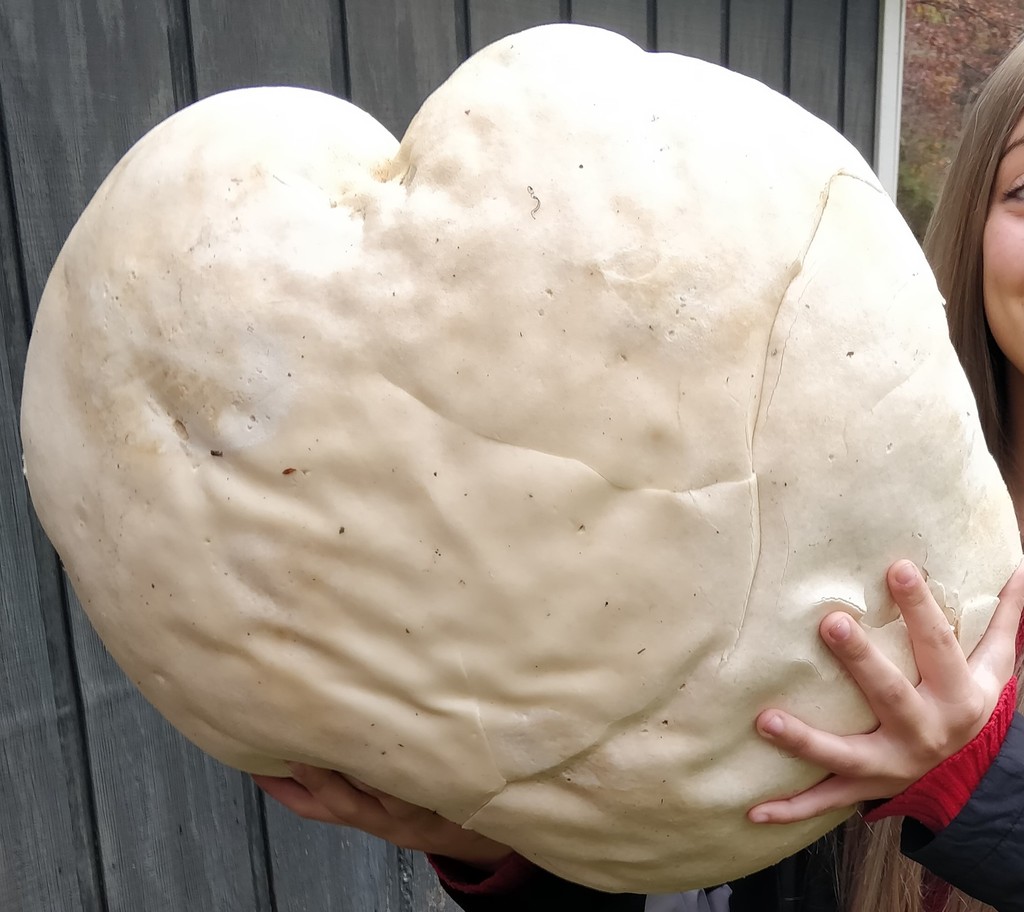
Study field marksCalvatia gigantea
A stemless white ball that can grow larger than a basketball and must be cut open before any culinary consideration.
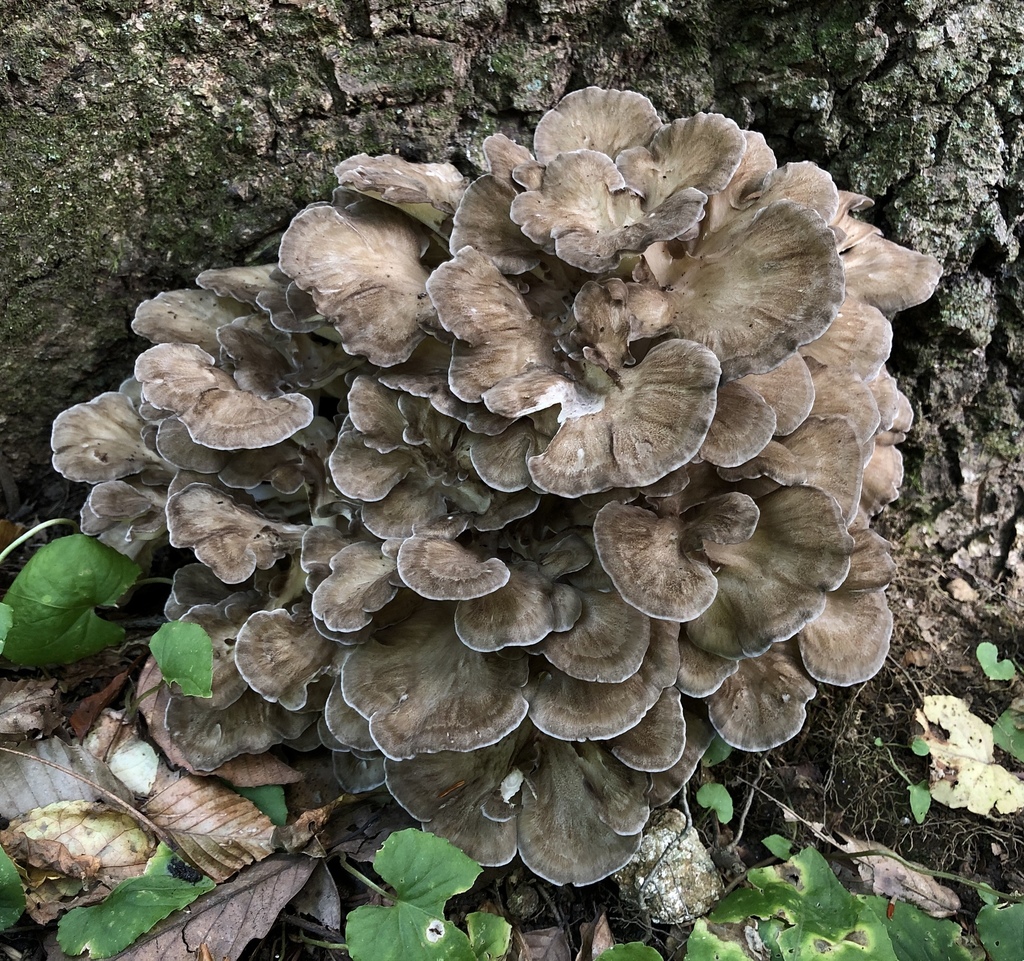
Study field marksGrifola frondosa
A large gray-brown rosette of many spoon-shaped fronds joined to a branched base beside mature hardwoods.
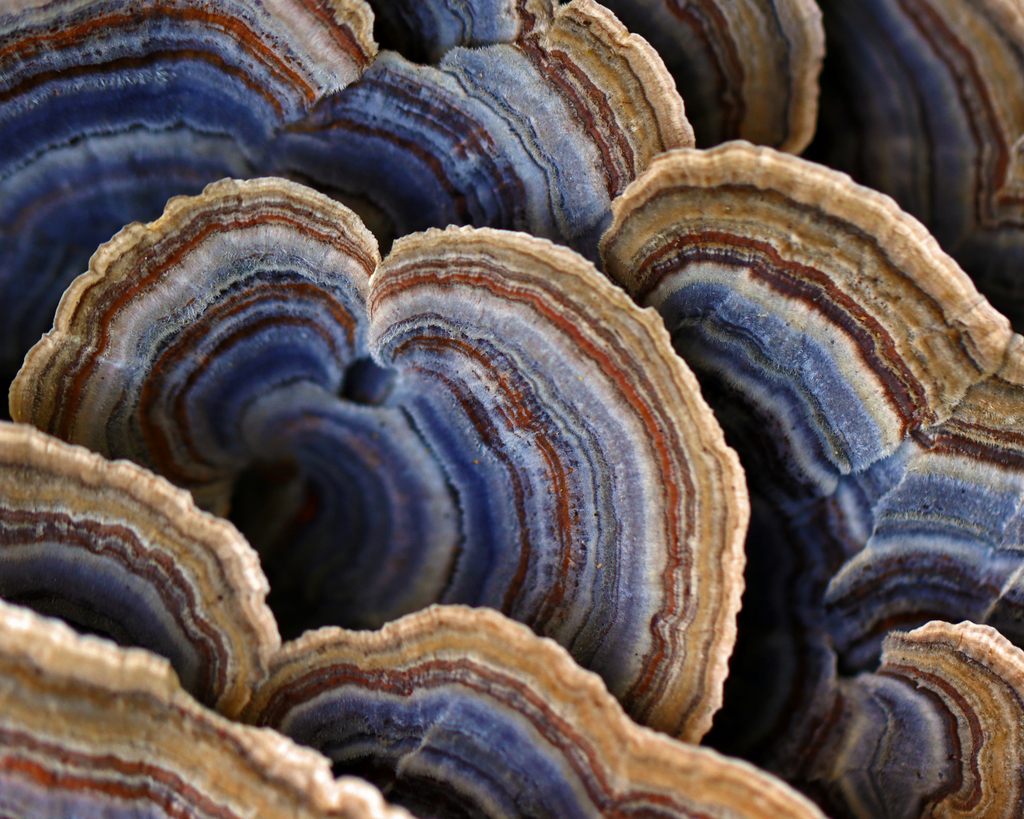
Study field marksTrametes versicolor
Thin flexible fans with velvety multicolored bands above and a dense white pore surface below.
Study field marksTricholoma murrillianum
A dense white pine mushroom with brown cap fibers, a sheathing ring, firm buried base, and a strong spicy odor.
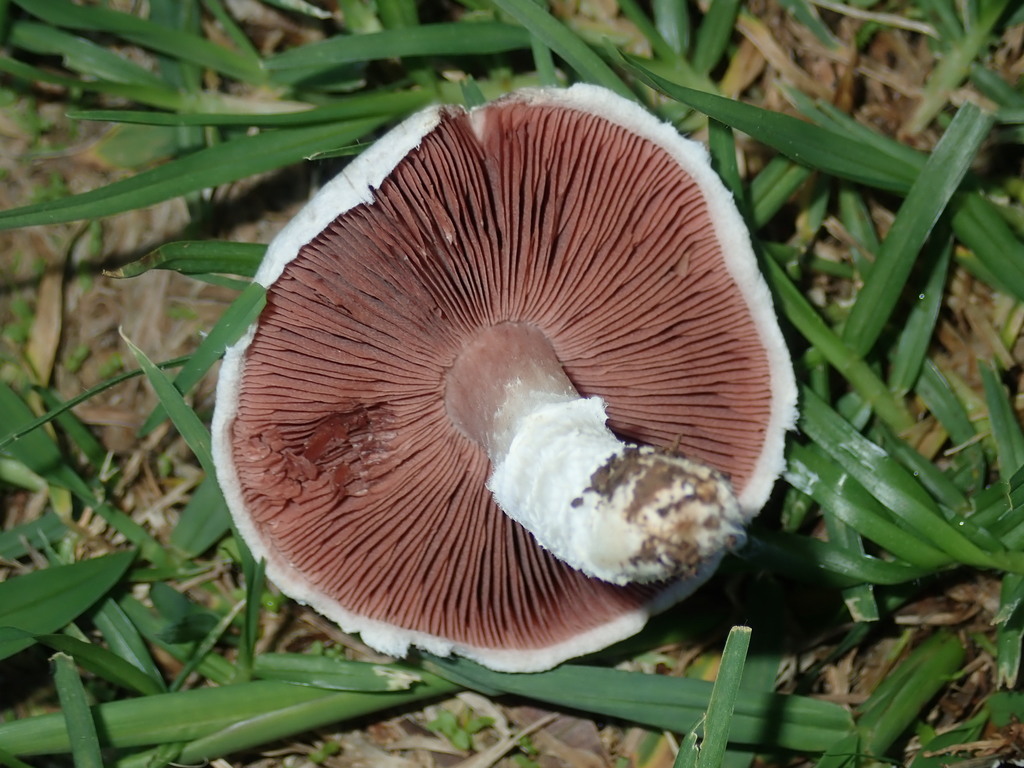
Study field marksAgaricus campestris
A white grassland Agaricus whose free gills mature from pink to chocolate brown and whose base has no volva.
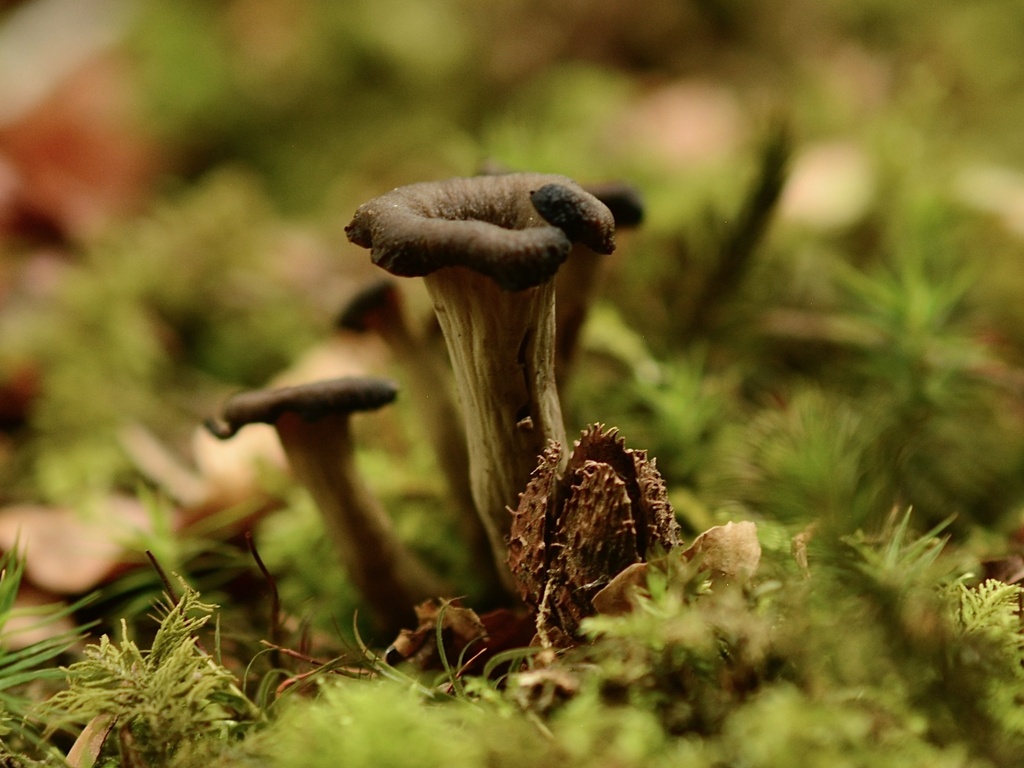
Study field marksCraterellus cornucopioides
A thin charcoal funnel that is hollow to the base, with a smooth to faintly wrinkled gray outer surface and no gills.
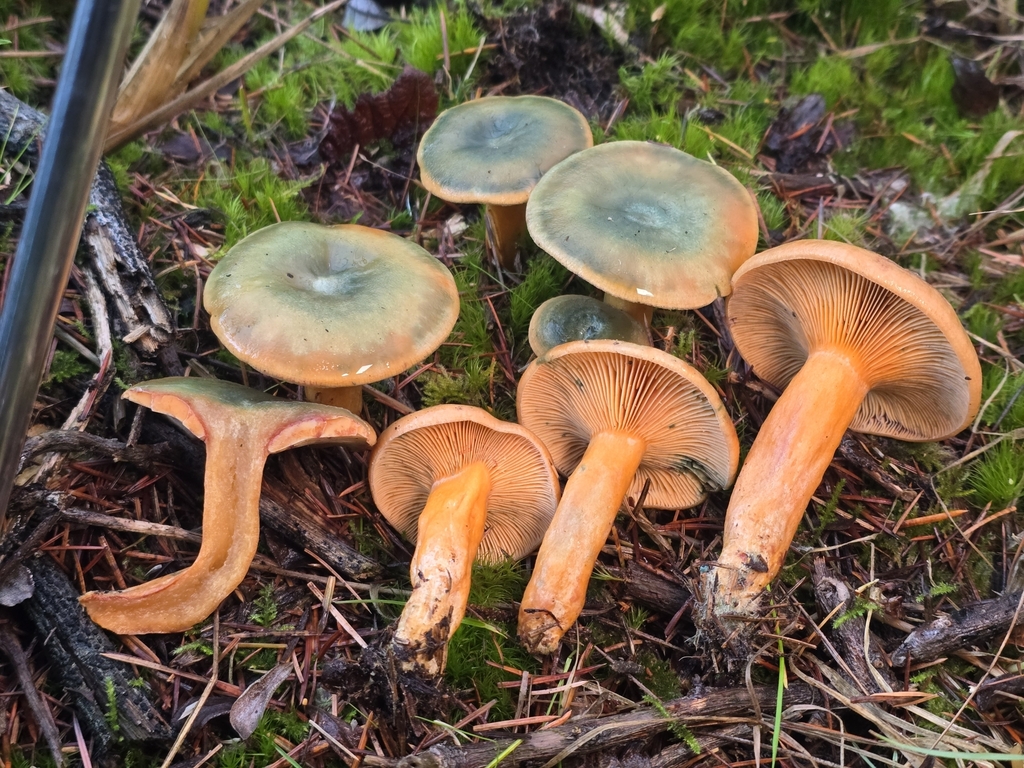
Study field marksLactarius deliciosus
An orange pine-associated milk cap with concentric cap zones, orange latex, and green staining where damaged.
Study field marksAmanita phalloides
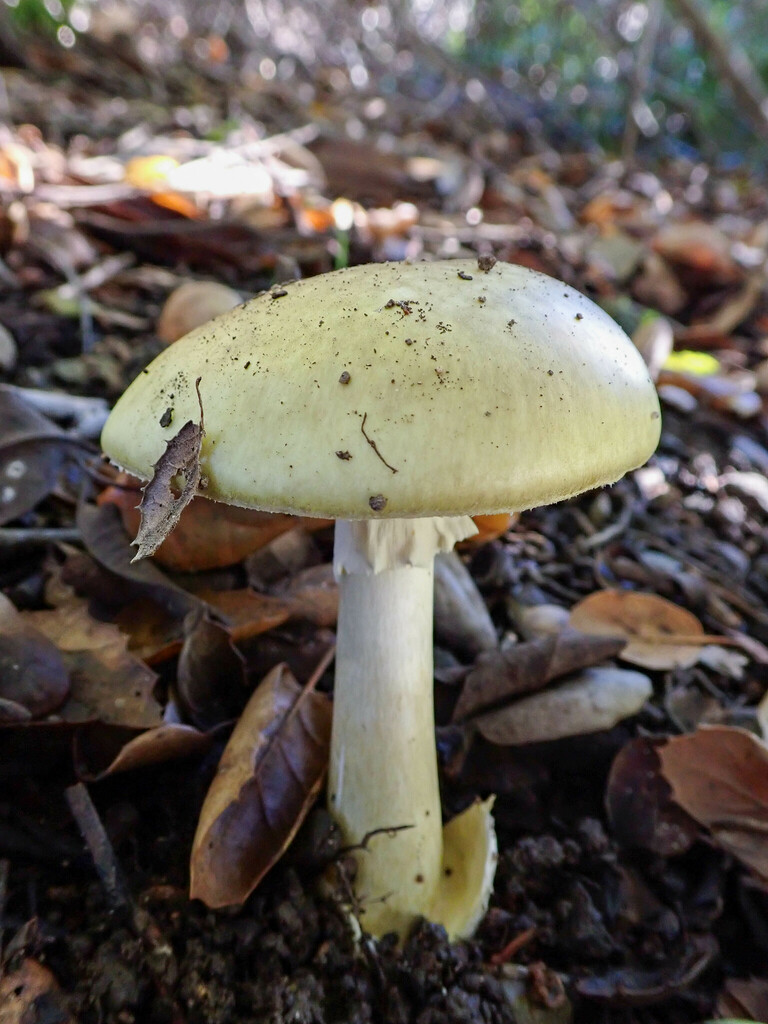
A deadly olive, bronze, yellow, or pale Amanita with free white gills, a ring, white spores, and a buried sack-like volva.
Study field marksChlorophyllum molybdites
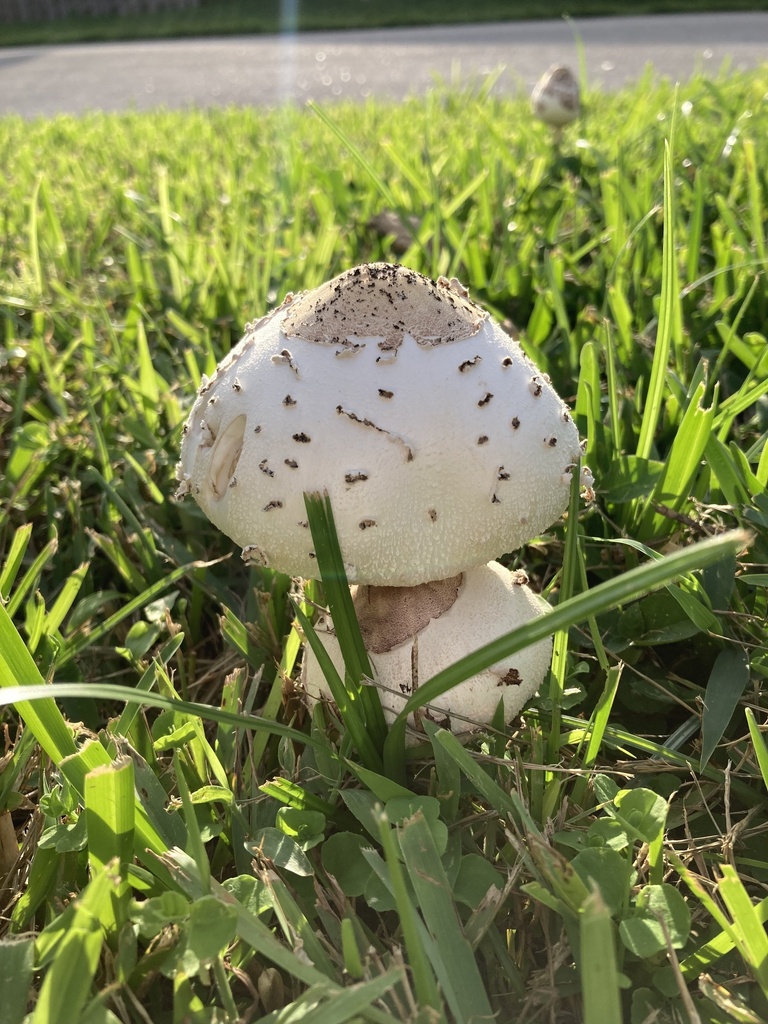
A large lawn parasol with brown cap scales, a movable ring, and gills that turn gray-green as its green spores mature.
Study field marksOmphalotus illudens
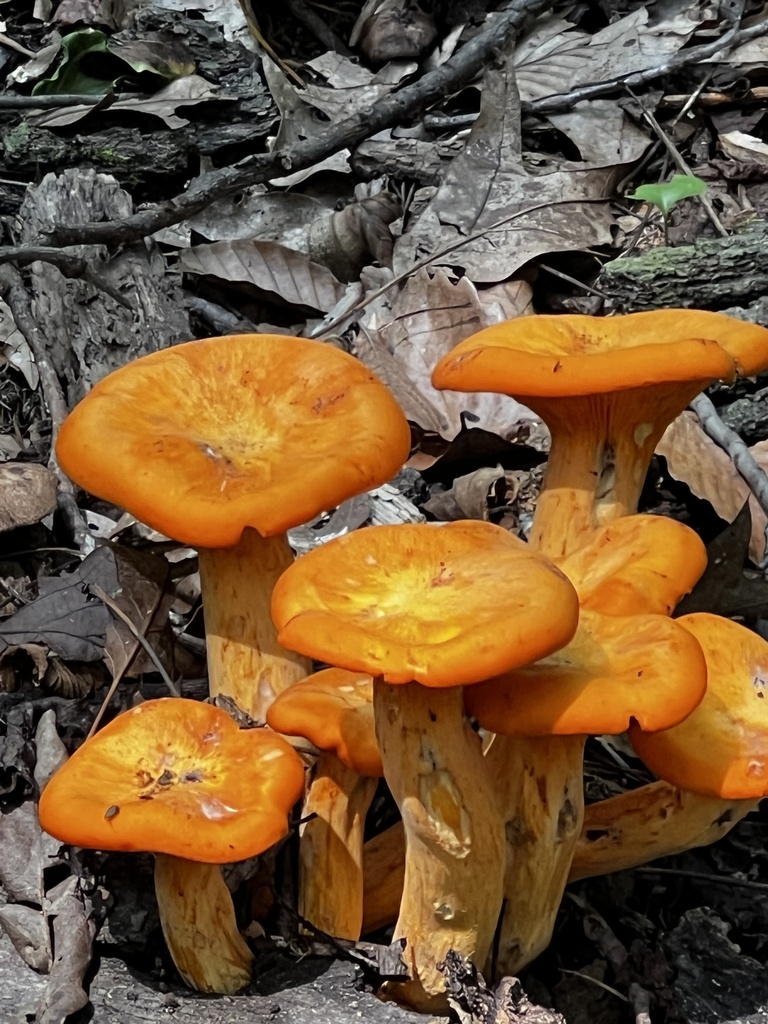
A poisonous orange mushroom in dense wood-based clusters, with sharp true gills descending the stem.
Study field marksGalerina marginata
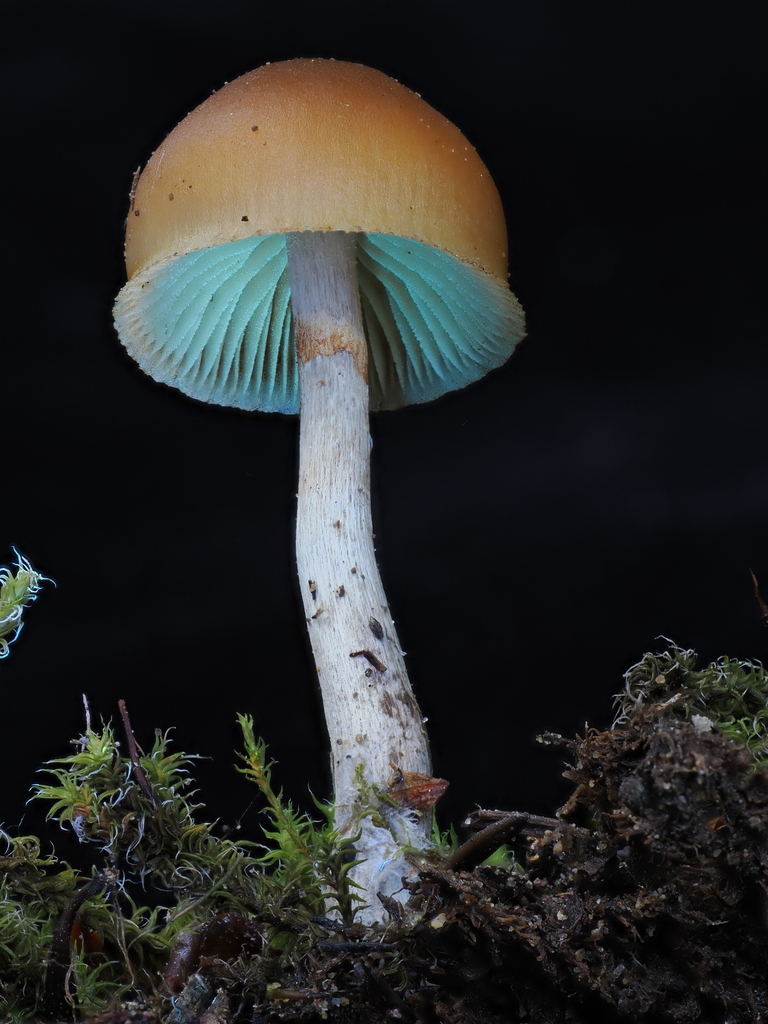
A small brown wood-growing mushroom with rusty gills and spores, a fragile ring zone, and potentially fatal amatoxins.
Study field marksScleroderma citrinum
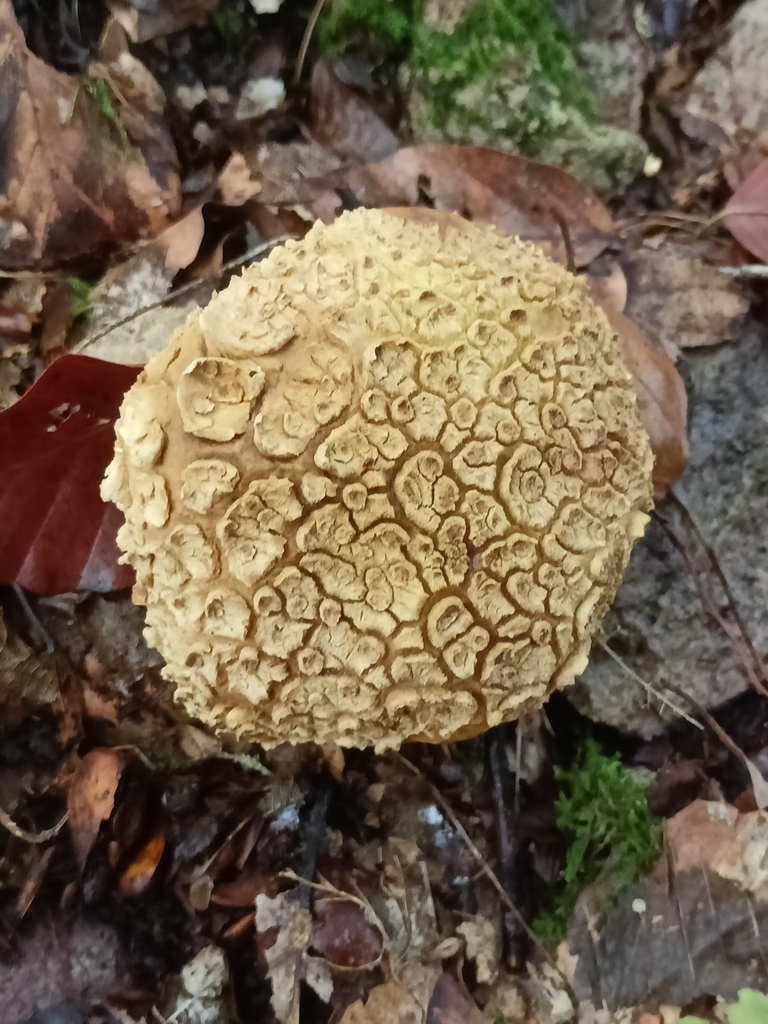
A firm yellow-brown ball with a thick cracked rind and a purple-black interior that distinguishes it from edible-stage puffballs.
Study field marksCoprinopsis atramentaria
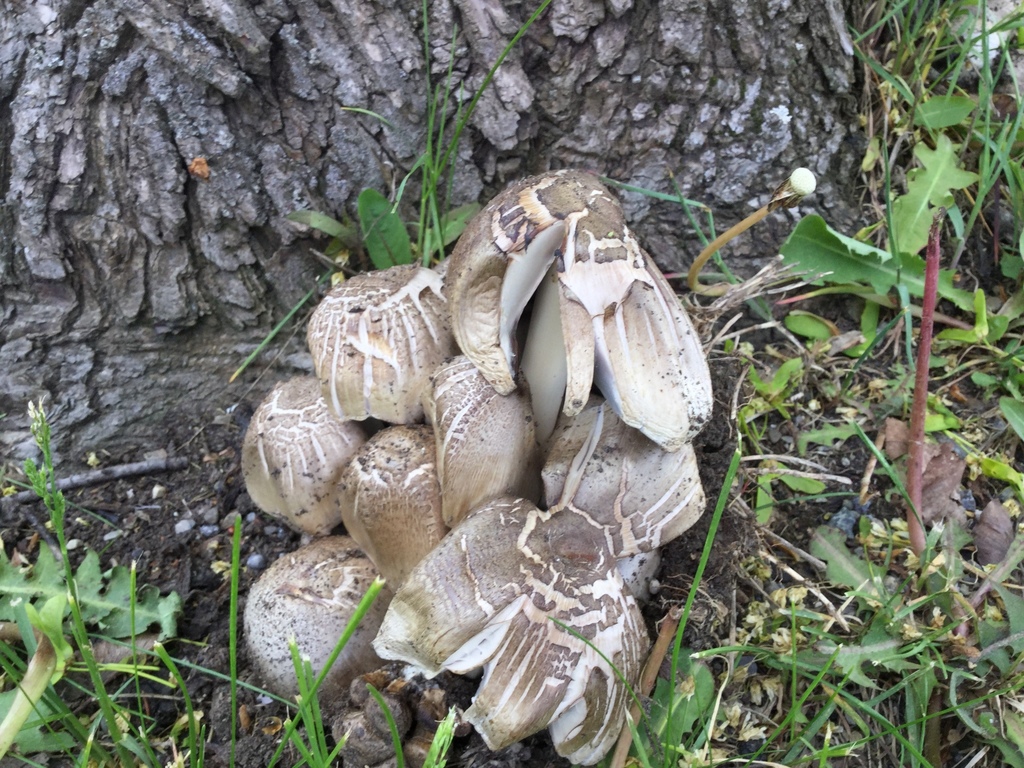
Smooth gray-brown clustered caps that dissolve into black ink and can trigger a severe alcohol reaction.
Study field marksBoletus rubriceps
A high-elevation spruce bolete with a red-brown cap, white then yellow pores, and pale netting on a thick stem.
Study field marksBoletus rex-veris
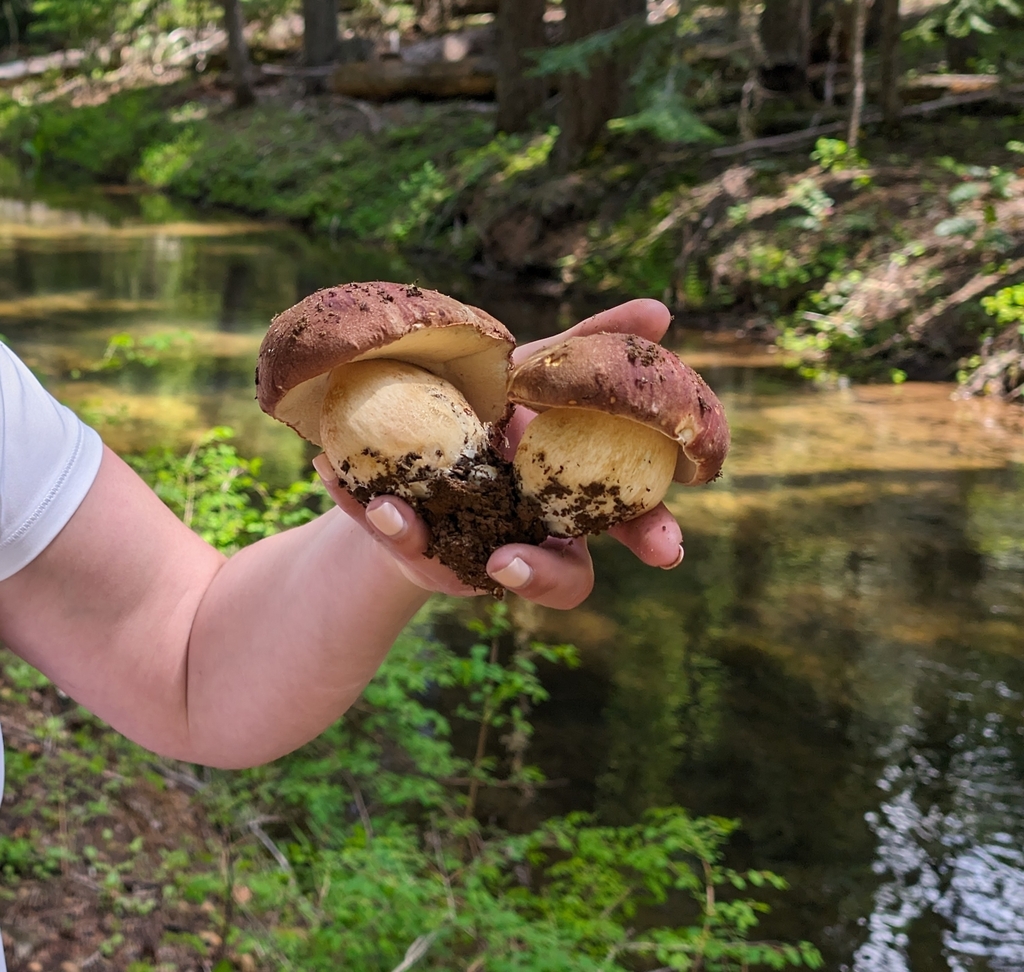
A western spring porcini with a brown cap, thick netted stem, white-to-yellow pores, and little or no blue staining.
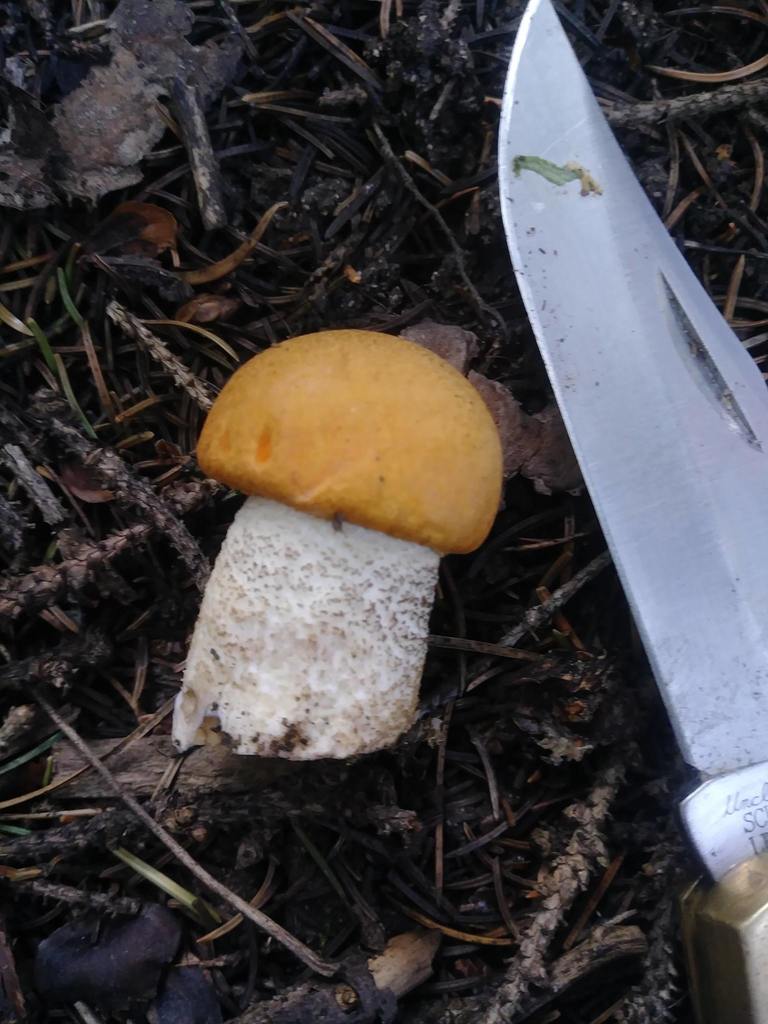
Study field marksLeccinum insigne
An orange-capped bolete under aspen, with pale pores and a white stem covered in dark scabers.
Study field marksConfirm cap, underside, stem, base, interior, spore print, substrate, and habitat. Use multiple reputable sources and a qualified local expert before considering consumption.
Shape the next release
Vote without an account. Your browser gets one anonymous vote, and you can change it whenever another species matters more.