Lookalikes to rule out
Panther Cap
toxicAmanita pantherina has a brown cap but causes a similar and often stronger poisoning syndrome.
Rain-washed Amanita
toxicRain can remove the white warts, so the ring, white gills, spore print, and basal structure still need examination.
Russula species
cautionRussulas lack both the skirt-like ring and the structured bulb at the stem base.
Identification
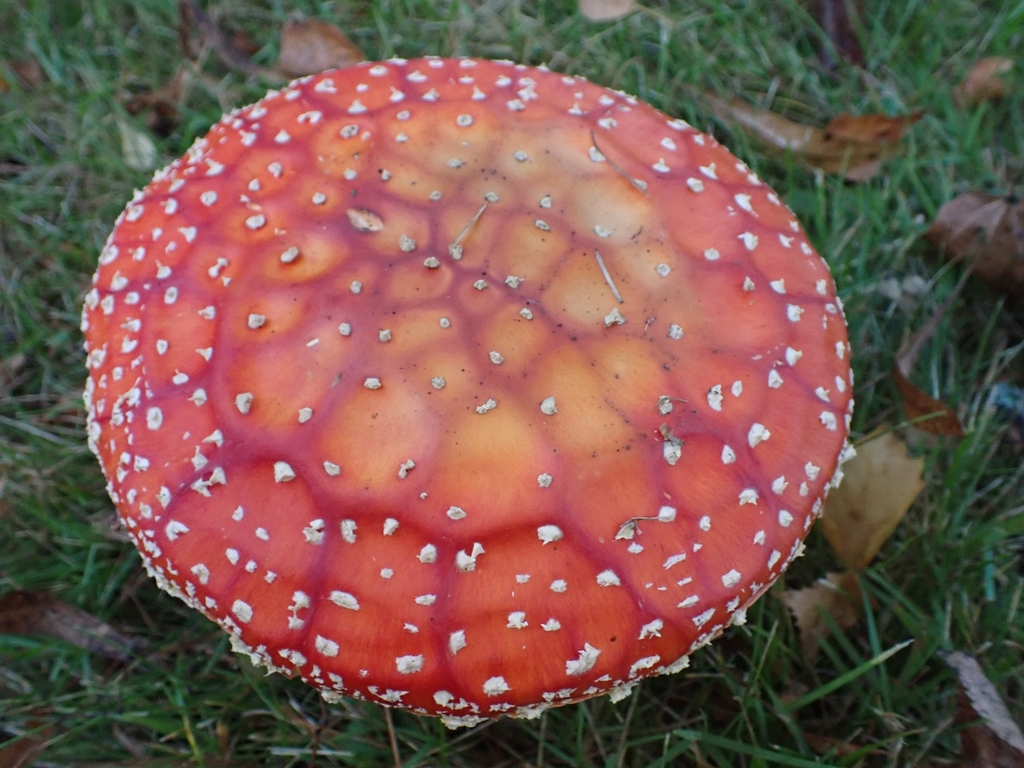
The familiar form has a red cap dotted with loose white veil patches, but North American populations may be orange or yellow and rain can wash the patches away. Confirm free white gills, a white spore print, a skirt-like ring, and a bulbous base with concentric scaly rings.
Why it matters
Fly agaric contains ibotenic acid and muscimol, which can cause delirium, profound drowsiness, vomiting, seizures, and coma. Deaths are uncommon, but emergency visits are real. The FDA reviewed Amanita muscaria and its constituents in 2024 amid a rise in unregulated edible products and concluded they were not authorized food ingredients.
Memorable fact
It may be the most depicted mushroom on Earth, appearing in fairy tales, games, and the mushroom emoji.