Lookalikes to rule out
Amanita button
deadlyA vertical slice reveals a developing cap, gills, and stem instead of featureless white flesh.
Earthball
toxicScleroderma species have a tough rind and a firm purple-black interior rather than a homogeneous white center.
Mature puffball
sickenerYellow, olive, or powdery flesh means the specimen is past the edible stage.
Identification
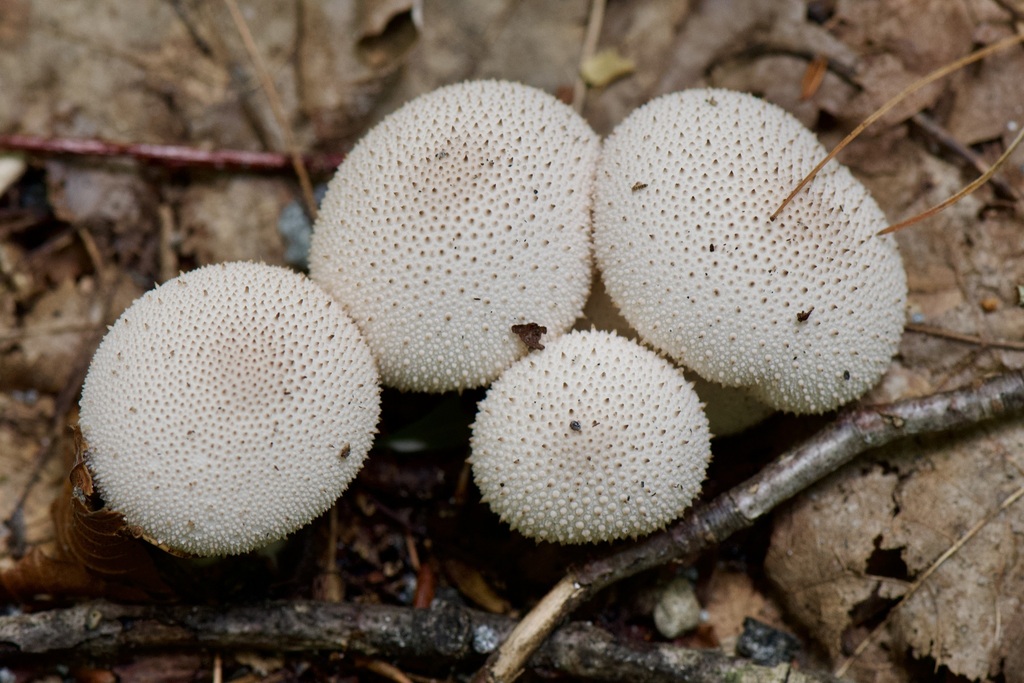
Gem-studded puffballs are white, golf-ball to pear shaped, and covered with tiny detachable cone spines. When the spines rub away they leave a net-like pattern. A vertical slice must show a uniform, pure-white interior with no internal outline or differentiated parts.
That slice test is not optional. A deadly Amanita enclosed in its universal veil can resemble a young puffball from the outside.
Uses and ecology
Only fresh, uniformly white specimens are considered edible, and they should be cooked. Older puffballs form a powdery spore mass. Deliberately inhaling that cloud can cause lycoperdonosis, a rare lung inflammation.
Memorable fact
The name Lycoperdon means "wolf fart," and mature puffballs use raindrop impacts to pump spores into the air.