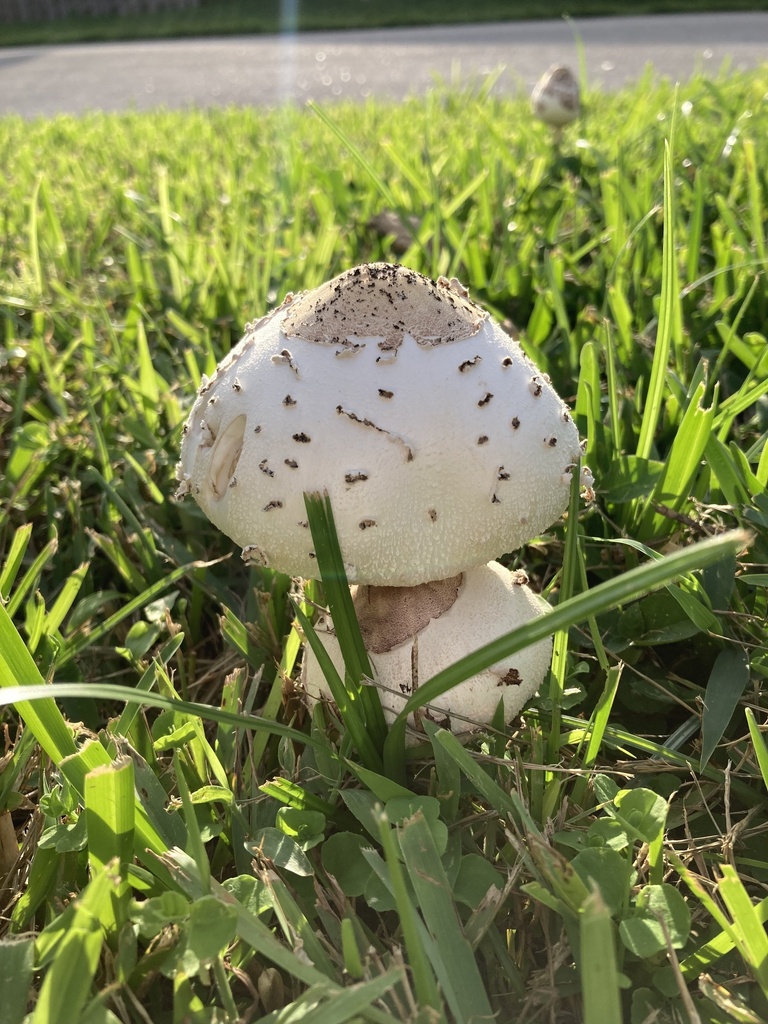
Lookalikes to rule out
Shaggy Parasol
toxic confusionChlorophyllum rhacodes has coarser shaggy scales, reddish bruising, and a white spore print, but the group still requires expertise.
Meadow Mushroom
toxicMeadow mushrooms develop pink then chocolate gills and a chocolate-brown print.
Amanita species
deadlyDig the entire stem base to check for a bulb or volva; white-gilled Amanita can overlap when young.
Identification
Young caps are rounded, then expand into broad parasols with a pale background and flat tan to brown scales. The tall stem carries a thick ring that can often slide. Gills are free from the stem and begin white, becoming gray-green only as spores mature.
Make a full spore print on white and dark paper. The dull green print is the decisive field clue, but waiting for it does not make a meal candidate safe. Young specimens can have white gills and are commonly mistaken for edible parasols.
Why it matters
This warm-climate lawn mushroom is among the most frequently ingested toxic mushrooms in the United States. Poisoning usually produces intense gastrointestinal illness, sometimes including bloody diarrhea and dehydration. Children and pets encounter it in yards as well as adults seeking edible parasols.
Remove fruiting bodies from play areas using gloves or a tool if accidental eating is a concern; touching the mushroom does not cause poisoning.
Memorable fact
Its green spores supplied the scientific name: molybdites refers to a lead-green color.