Lookalikes to rule out
Bitter Bolete
harmlessTylopilus felleus develops pink-flushed pores and coarse dark netting; its intense bitterness ruins a meal.
Red-pored boletes
cautionRed or orange pores and strong blue staining are a stop sign for beginners, not a feature to dismiss.
Identification
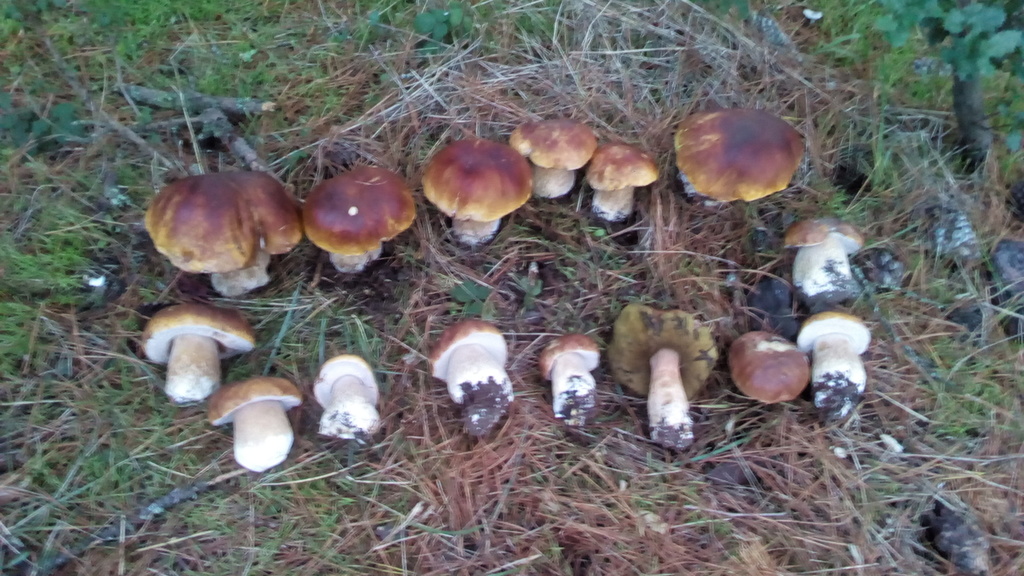
King boletes have pores rather than gills. Those pores are white when young, then yellow and olive, never red. The upper stem usually carries fine white netting, and the thick white flesh does not change color when cut. A mature cap often resembles a brown hamburger bun.
North American porcini form a species complex. In the Rockies, red-capped specimens may be Boletus rubriceps, a species formally named only in 2014.
Uses and ecology
Porcini are among the world's most valued culinary mushrooms. Drying concentrates their aroma, while fresh specimens hold up well to sauteing and roasting. They are mycorrhizal partners of trees, so commercial cultivation remains impractical and the market relies on wild harvest.
Memorable fact
The Italian name "porcini" means little pigs or piglets.