Lookalikes to rule out
Bear's Head Tooth
harmlessHericium americanum branches repeatedly before producing long teeth; it is an edible relative.
Coral Tooth
harmlessHericium coralloides forms a delicate branching coral with shorter comb-like teeth.
Identification
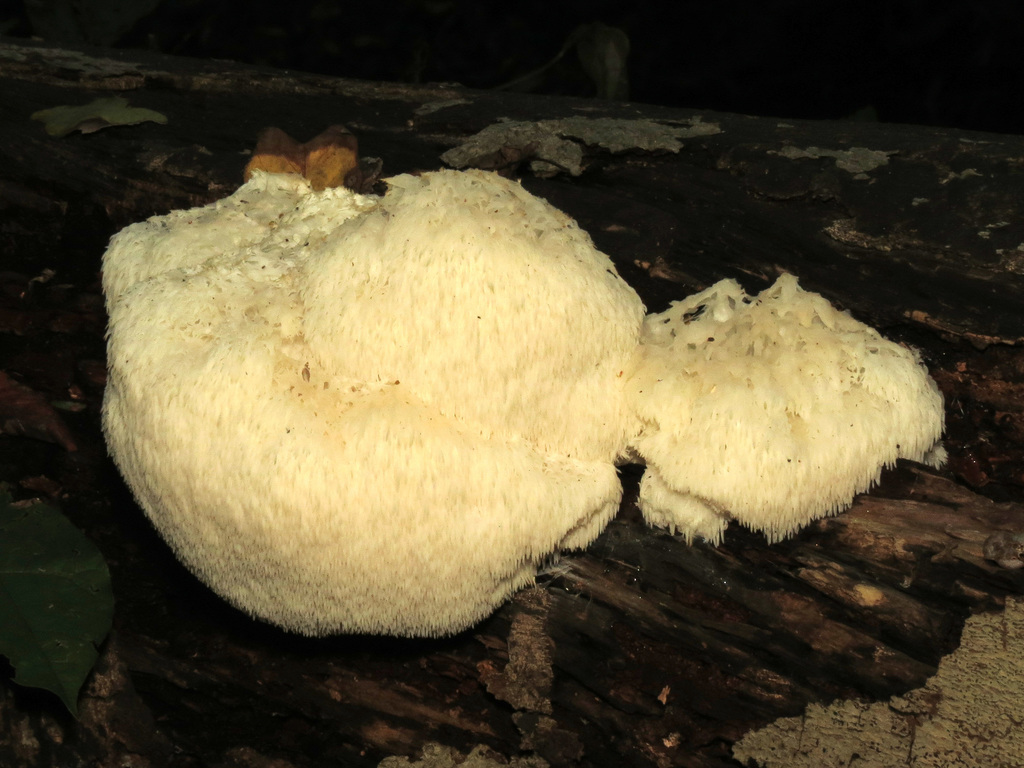
Lion's mane forms a single, unbranched white cushion covered with long hanging spines. It has no cap, gills, or conventional stem and grows directly from hardwood. Fresh specimens are pure white and gradually yellow or brown with age.
Its only close lookalikes are other Hericium species, which branch into different shapes and are also generally regarded as edible.
Uses and ecology
Cooked lion's mane has a firm seafood-like texture and can be cultivated on prepared sawdust blocks or kits. Laboratory and animal research on hericenones and erinacines is interesting, but human studies remain small, short, and mixed. The evidence does not support presenting lion's mane as a treatment.
Memorable fact
Wild lion's mane is legally protected in the United Kingdom, while cultivated blocks can fruit on a kitchen counter.