Lookalikes to rule out
Old lobster mushroom
cautionSoft texture, purple discoloration, or a fishy odor indicate deterioration rather than a fresh specimen.
Unparasitized Russula or Lactarius
cautionWithout the hard, finely pimpled red-orange crust, the host must be identified on its own merits.
Identification
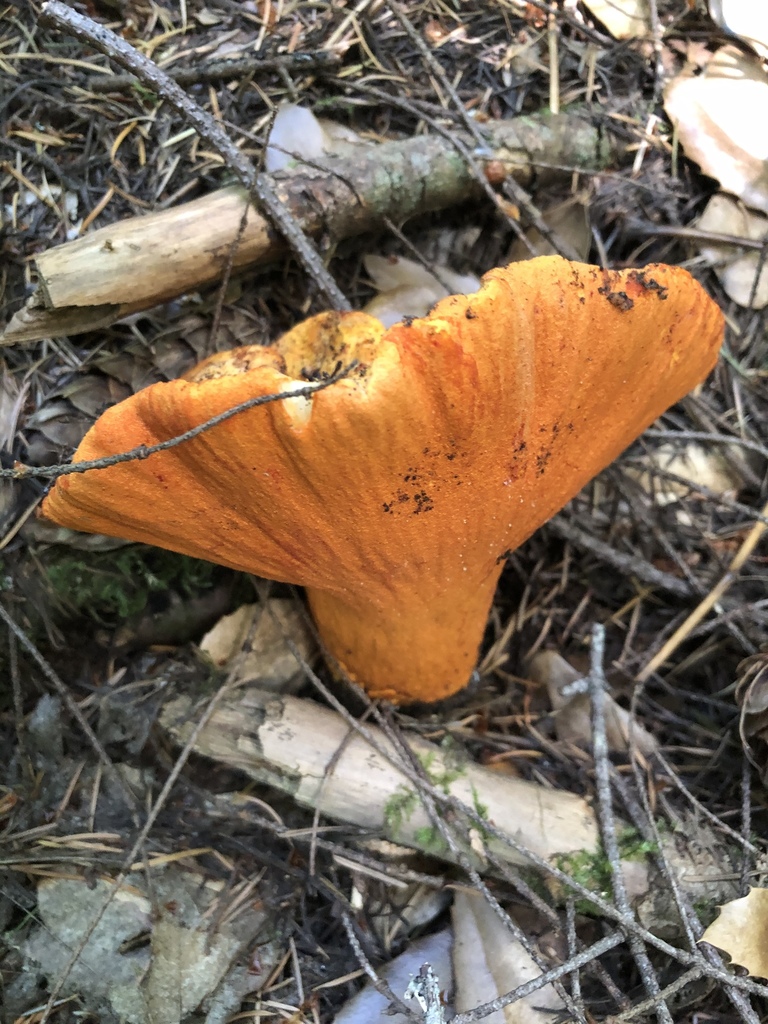
This is a parasitic mold wrapped around another mushroom, usually Russula brevipes or Lactifluus piperatus. The result has a hard red-orange rind with a finely pimpled texture, dense white interior, and gills reduced to shallow ridges or covered entirely. It often pushes through forest duff half buried.
Uses and ecology
Fresh lobster mushrooms are firm and hold their texture in stews and sauteed dishes. The pigment can also be used in fabric dyeing. Evidence indicates that the parasite strongly favors non-dangerous hosts, but because the host is obscured, careful condition checks matter.
Memorable fact
The parasite turns notoriously bland hosts into a commercially sold delicacy.