Lookalikes to rule out
Angel Wings
cautionPleurocybella porrigens is thinner, stemless, and grows on conifer wood; avoid it.
Jack-o'-lantern
toxicJack-o'-lanterns are orange and grow in dense clusters; oyster mushrooms are never bright orange.
Crepidotus species
cautionThese are often smaller and produce a brown spore print rather than a pale one.
Identification
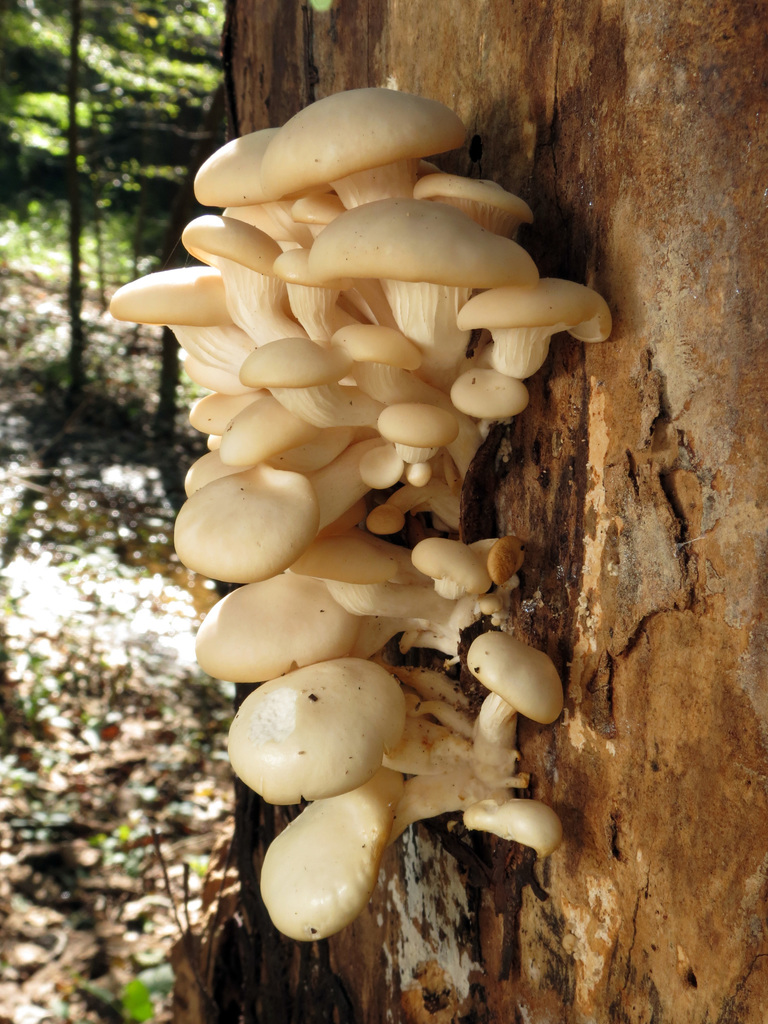
Oyster mushrooms form overlapping fans or shelves on wood. Their white to cream gills run down a short, off-center stem, and the spore print is pale. The caps should smell pleasant and mild, sometimes faintly of anise. Substrate is a core field mark: inland oysters commonly fruit from hardwood logs and snags.
Uses and ecology
Oysters are good cooked edibles and one of the easiest mushrooms to cultivate on straw, sawdust blocks, or prepared kits. Claims about cholesterol and medicinal effects remain research questions, not reasons to self-treat. Oyster mycelium is also studied for environmental remediation.
Memorable fact
Oyster mycelium can paralyze and digest nematode worms to obtain nitrogen.