Lookalikes to rule out
Common Inky Cap
sickenerCoprinopsis atramentaria is smooth and gray-brown, without shaggy scales, and can trigger an alcohol reaction.
Green-spored Parasol
toxicIt develops a parasol shape, never dissolves into ink, and produces a green spore print.
Amanita button
deadlySlice young specimens vertically; any hidden cap, gills, stem, or volva means it is not a shaggy mane.
Identification
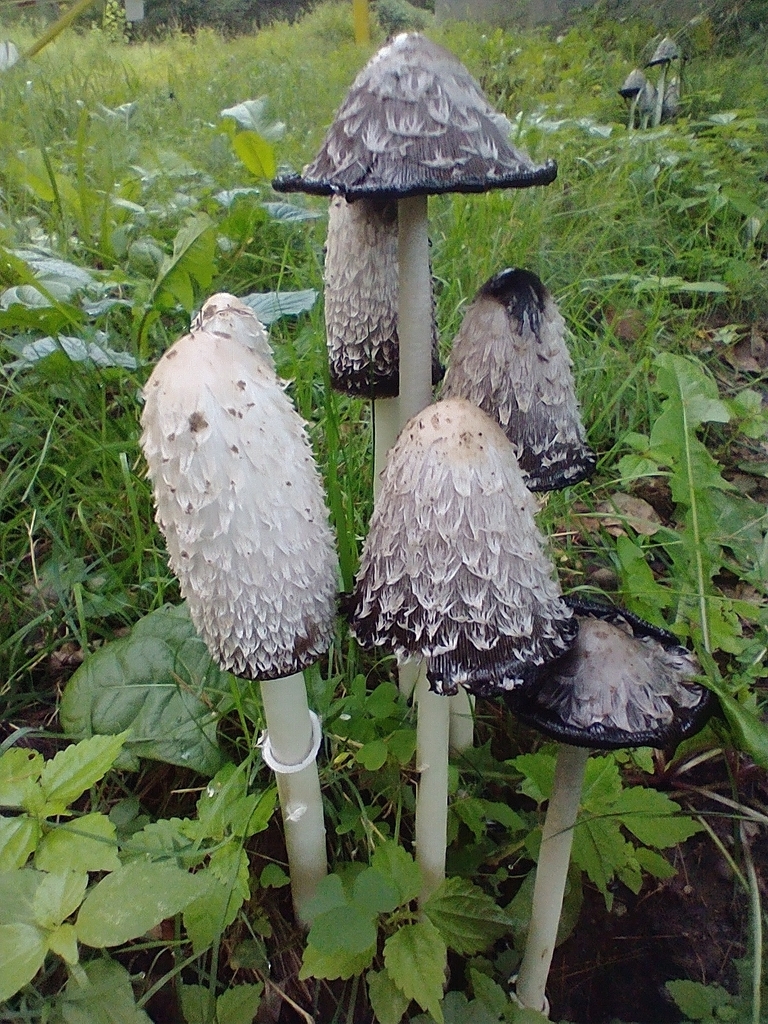
The young cap is a tall white cylinder covered with shaggy, upturned scales. As it matures, the gills shift from white to pink to black and the cap dissolves into ink from the rim upward. A loose ring may remain on the stem. This self-digestion is a powerful clue, but only once other lawn mushrooms have been ruled out.
Uses and ecology
Young, completely white shaggy manes are delicate cooked edibles and deteriorate within hours, even under refrigeration. Their smooth gray relative, the common inky cap, contains coprine and can cause a severe alcohol reaction. Shaggy mane ink has historically been used as writing ink.
Memorable fact
These mushrooms can force their way through and buckle asphalt.