Lookalikes to rule out
Amanita smithiana
deadlyThis white Amanita may have veil debris and a rooting or club-like base; confusion has caused delayed kidney failure.
Catathelasma species
cautionThese are similarly dense and ringed but have strongly decurrent gills and a different odor.
Scaly Tricholoma species
toxicGray or brown Tricholoma can lack the characteristic firm white flesh and spicy cinnamon-like odor.
Identification
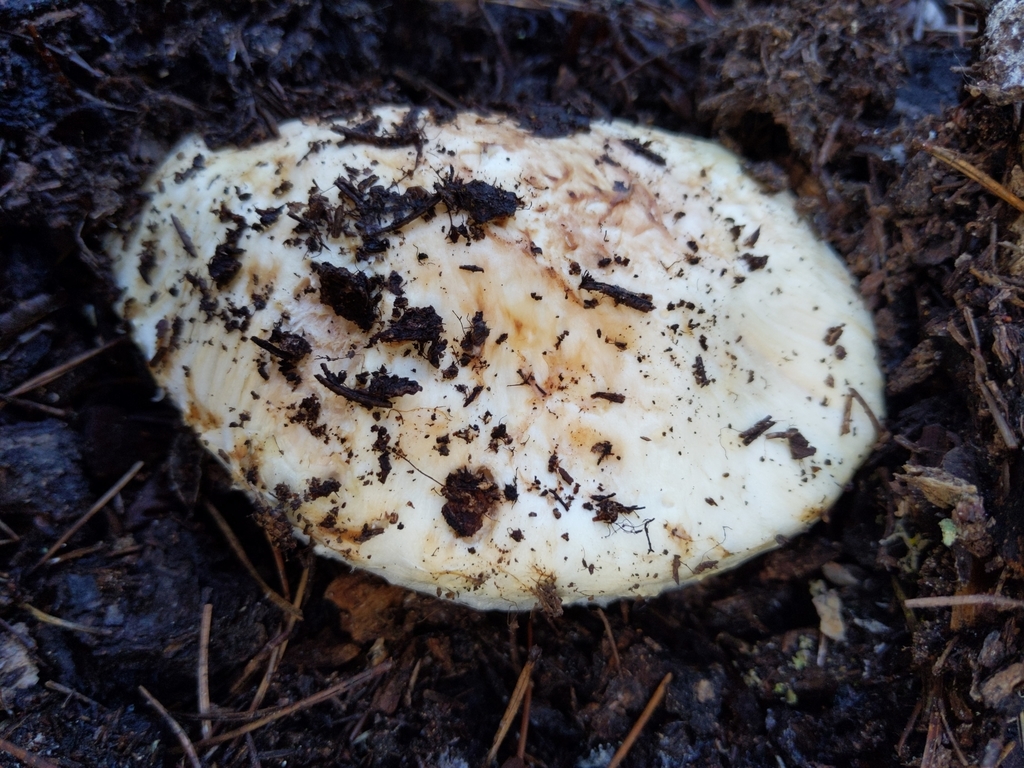
Western matsutake begins partly buried, often lifting a cap of duff as it expands. The cap is white beneath pressed brown fibers or scales. The stem is dense and solid, with a cottony sheathing ring and firm tapered base but no sack-like volva. White gills are crowded and may notch near the stem.
Its odor is often described as spicy, cinnamon-like, resinous, or like dirty socks. Treat that as supporting evidence only. Dig the complete base, photograph the habitat, and confirm every structural feature.
Uses and ecology
This is a commercially harvested mushroom with deep importance in Japanese cuisine, where aroma and firm texture are central. It should be cooked, and rare gastrointestinal reactions are documented. The much larger risk is mistaken identity with kidney-toxic Amanita smithiana in the Pacific Northwest.
Western matsutake is mycorrhizal and connected to living host roots. Harvest and permit rules vary sharply by forest and jurisdiction.
Memorable fact
North America's western species received its current name after genetic work separated it from the Eurasian matsutake and eastern pine mushroom.