Lookalikes to rule out
Other Leccinum species
cautionHost tree, cap color, staining, and microscopic traits separate similar scaber-stalk boletes.
Rocky Mountain Porcini
cautionPorcini have net-like reticulation on the stem rather than separated dark scabers.
Orange-capped Boletes
cautionSimilar caps occur with birch and other hosts; the aspen association must be documented rather than assumed.
Identification
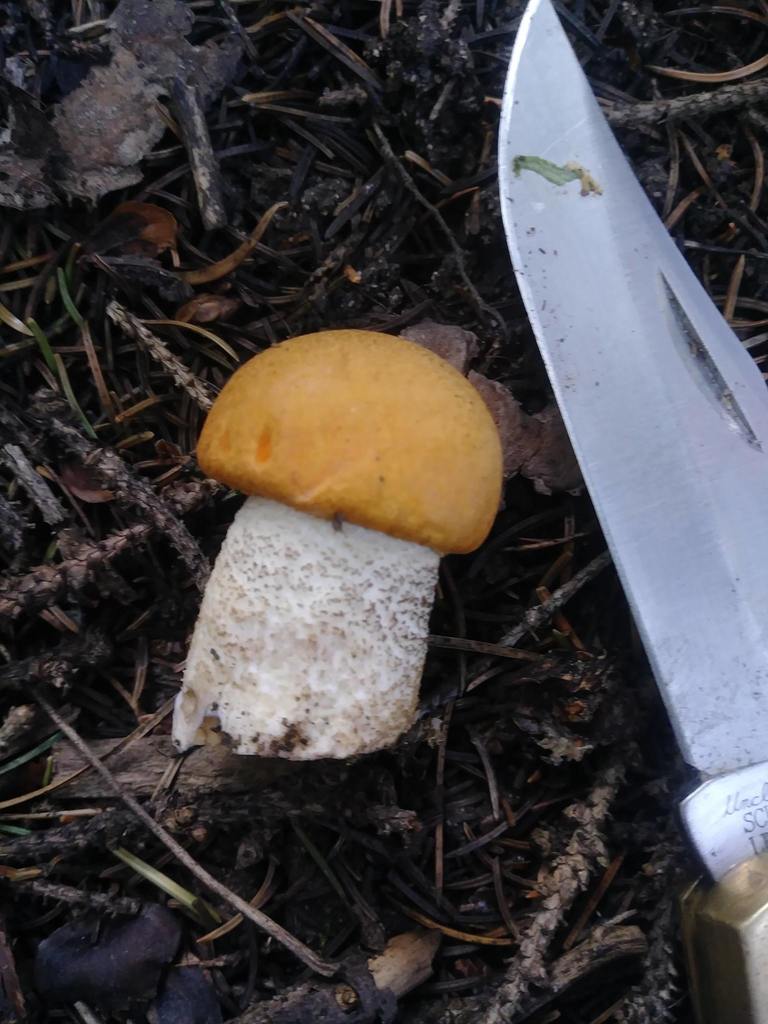
The cap is orange to orange-brown and sits above a thick pale stem dotted with rough dark flecks called scabers. The underside has pores that begin whitish and age gray to brownish. Cut flesh may slowly discolor gray, violet, or dark near the stem base.
Find and photograph the nearby aspen. Leccinum species are tightly associated with host trees, and an orange cap without host context is not a reliable species identification.
Uses and risk
Aspen boletes have a history of culinary use, but western Leccinum collections have also been associated with significant gastrointestinal illness. Misidentification, inadequate cooking, and individual sensitivity are difficult to separate in reports. This guide therefore treats the species as edible only with expert-level caution rather than as a routine food mushroom.
The fungus forms a mycorrhizal partnership with aspen roots and often appears in groups after summer rain.
Memorable fact
Scabers look like dark scales, but they are clusters of projecting cells that give the group its scaber-stalk name.