Lookalikes to rule out
King Bolete
harmlessThe broad Boletus edulis concept overlaps in form, but geography, host, and DNA separate regional species.
Bitter Bolete
cautionTylopilus felleus develops pinkish pores and dark netting and has intensely bitter flesh.
Red-pored Boletes
toxicRed or orange pores and rapid blue staining move the specimen outside this porcini profile.
Identification
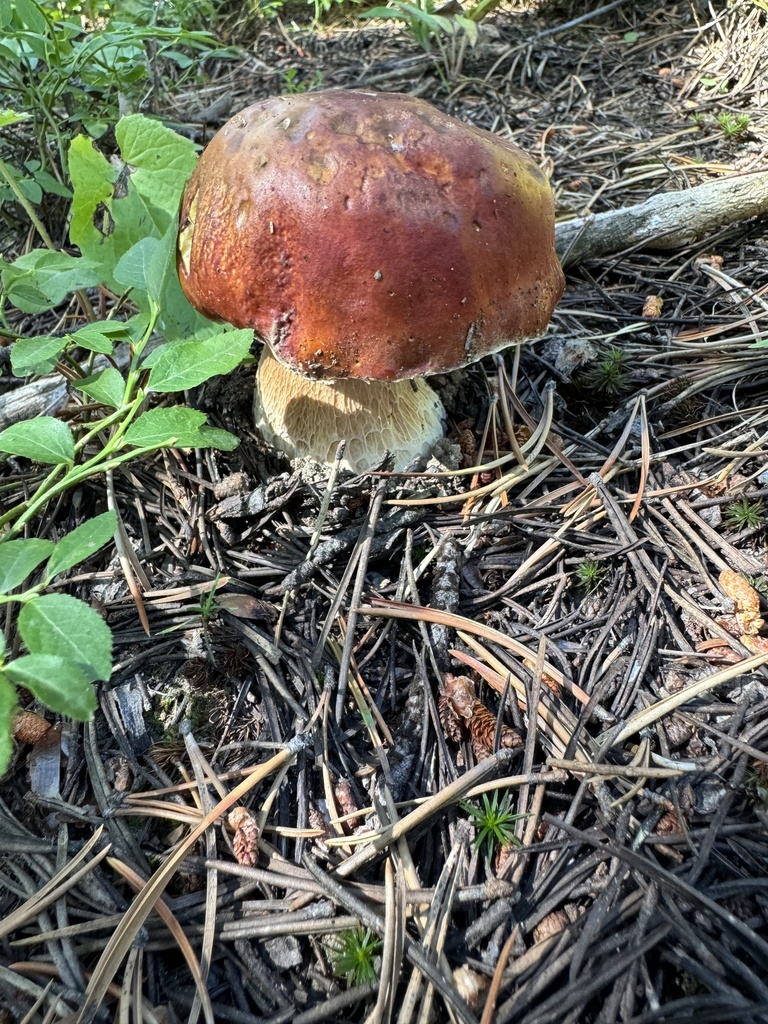
The cap is chestnut to deep red-brown and often looks polished when moist. Young pores are white and stuffed, then open and age yellow to olive. The thick club-shaped stem carries a fine pale net pattern, especially near the top. Cut flesh is white and should not rapidly turn blue.
Habitat narrows the identification: B. rubriceps is associated with high-elevation spruce and fir in the southern Rocky Mountains, including Utah, Colorado, New Mexico, and Arizona.
Uses and ecology
Firm, sound specimens are highly regarded cooked mushrooms and can be dried for concentrated flavor. Check for insect tunnels and soft pore layers, which develop quickly. A pore surface does not automatically mean edible; stem ornament, bruising, taste, and regional bolete knowledge all matter.
The fungus exchanges nutrients with living conifer roots and commonly fruits after sustained summer moisture.
Memorable fact
Rocky Mountain porcini was formally described as its own species in 2014 after long being folded into the European king bolete name.