Lookalikes to rule out
Morel
toxic confusionTrue morels have regular pits and ridges and one clean hollow chamber from cap to base.
Snow Morels
cautionOther Gyromitra species vary in toxicity and are difficult to separate; regional expert review is needed.
Verpa species
cautionVerpa caps attach only at the top of the stem and hang like a thimble.
Identification
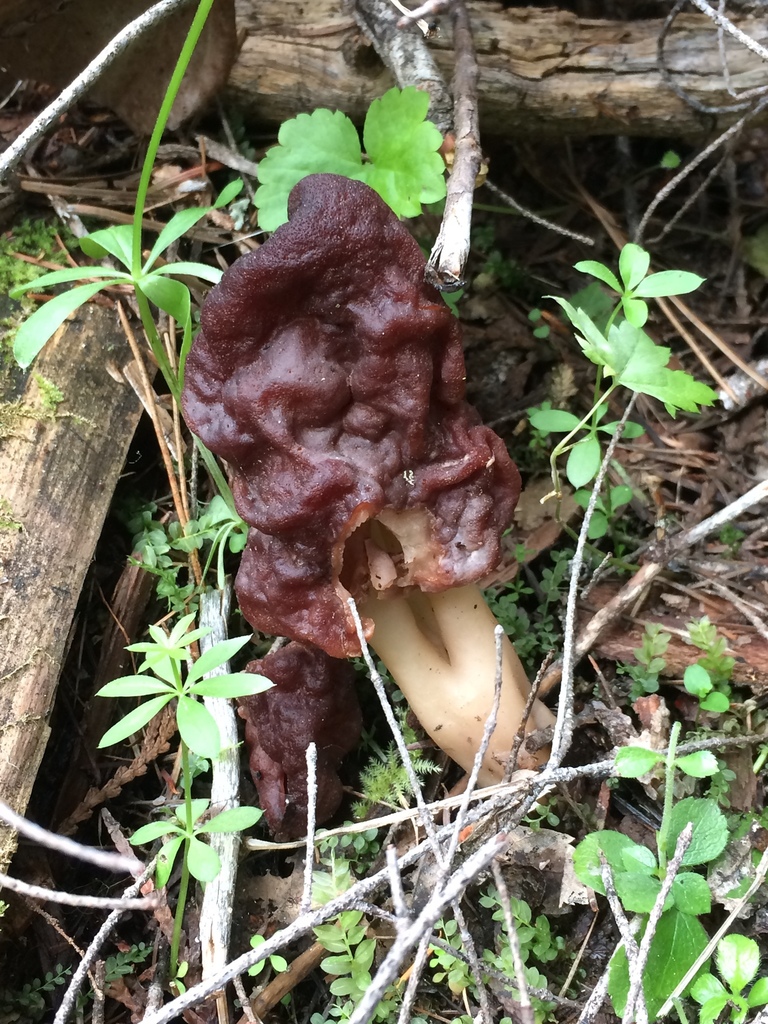
The reddish-brown cap forms broad, brain-like folds rather than the honeycomb pits of a true morel. Slice it lengthwise: the interior is chambered and may contain cottony wisps, never one open hollow from top to bottom. It often fruits near snowmelt in conifer habitat during true-morel season.
Why it matters
False morels contain gyromitrin, which the body converts to monomethylhydrazine. Poisoning can begin with delayed gastrointestinal symptoms and progress to seizures, hemolysis, liver injury, and death. Traditional parboiling practices do not reliably remove all toxin, and vapors have poisoned cooks.
Memorable fact
Its name esculenta means edible or delicious, an unusually ironic epithet for a fungus associated with a rocket-propellant chemical.