Lookalikes to rule out
False Morel
toxicFalse morels have folded, brain-like lobes and a chambered or cottony interior instead of one clean hollow chamber.
Verpa bohemica
cautionIts cap hangs from the very top of the stem like a thimble rather than joining along the lower edge.
Identification
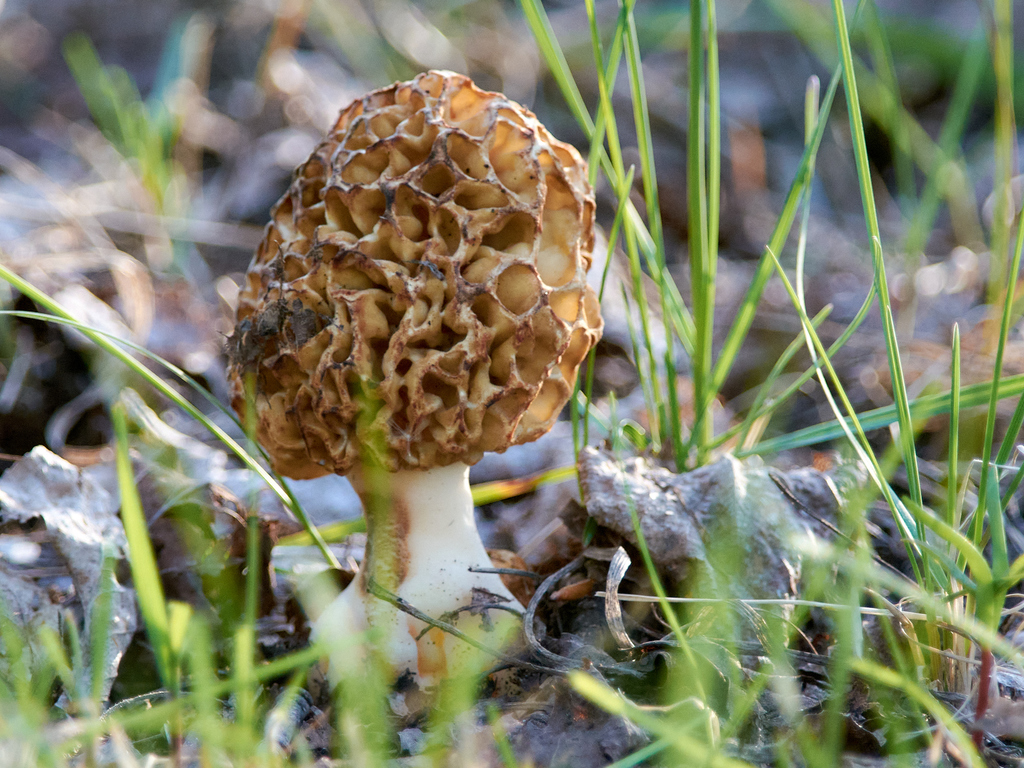
A true morel has a honeycomb surface made of pits and ridges, not loose wrinkles. Slice the entire mushroom from cap to base: the inside should form one clean hollow chamber. The cap joins the stem along its lower edge, and the mushroom grows from soil rather than wood.
North American yellow morels are often treated as Morchella americana or M. esculentoides rather than the European M. esculenta. Local taxonomy varies, but the field checks above remain essential.
Uses and ecology
Morels are widely prized for a nutty flavor and dry well, but they must be thoroughly cooked. A 2023 Montana restaurant outbreak linked raw or undercooked morels with 51 illnesses and two deaths. Western burn morels can fruit heavily during the first spring after wildfire; elsewhere, look around dying elms, ash, old orchards, and cottonwood bottoms.
Memorable fact
Commercial crews follow the previous summer's wildfires across the West each spring, searching for brief mass flushes.