Lookalikes to rule out
Amanita button
deadlyA vertical cut through an Amanita button reveals a developing cap, gills, and stem rather than featureless white flesh.
Common Earthball
toxicEarthballs have a tough patterned rind and soon develop a dense purple-black center.
Western Giant Puffball
harmlessCalvatia booniana has a thick outer coat broken into polygonal plates and is a separate western species.
Identification
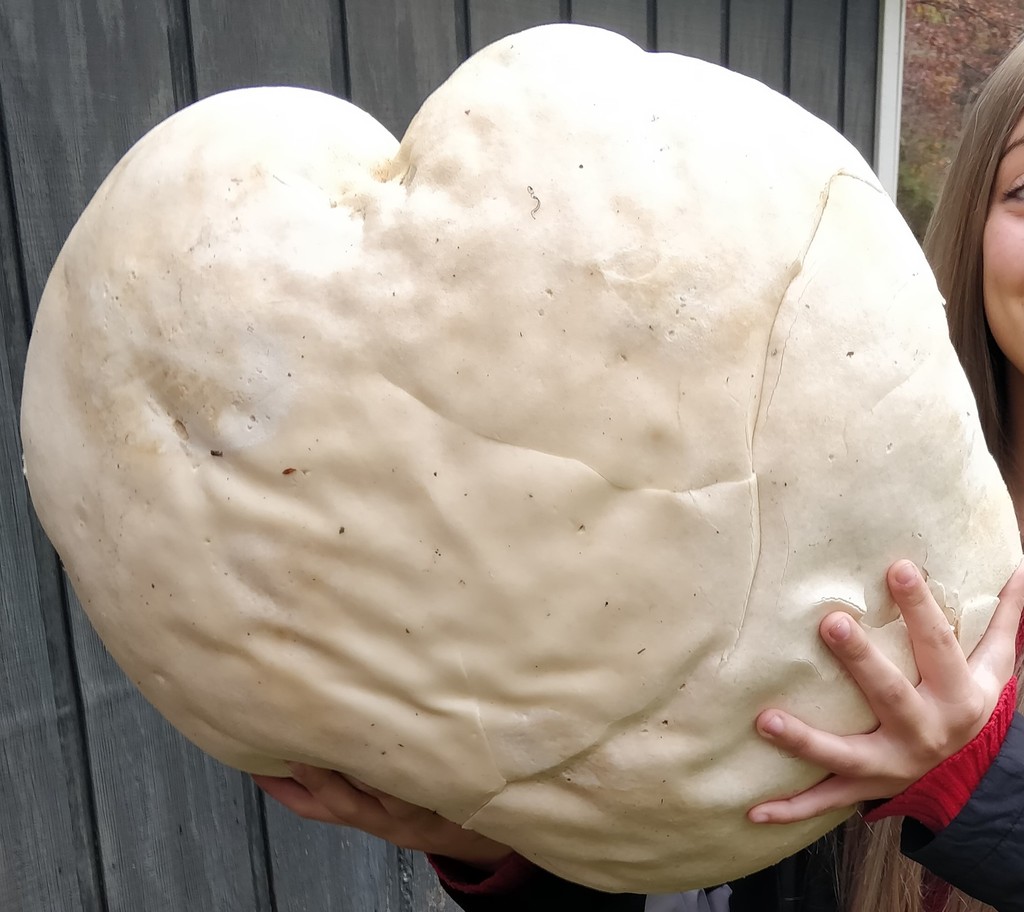
Giant puffballs are round to irregular white fruiting bodies without a cap, gills, or conventional stem. Mature specimens may exceed 30 centimeters across. The surface begins smooth and white, then yellows or browns as the interior transforms into spores.
Cut from top to bottom before doing anything else. Fresh interior tissue must be solid, homogeneous, and pure white. A yellow, olive, brown, watery, or powdery center is past the edible stage. Any internal mushroom-shaped structure rules out a puffball.
Uses and ecology
Fresh, correctly identified white flesh is sliced and cooked. Giant size does not replace the cut test, and smaller specimens demand even more care. They are saprotrophic, obtaining nutrients from organic matter in soil rather than partnering with a living tree.
Old specimens release enormous clouds of microscopic spores. Avoid deliberately kicking or inhaling them because concentrated puffball spores can inflame the lungs.
Memorable fact
A single mature giant puffball can produce trillions of spores.