Lookalikes to rule out
Golden Chanterelle
toxic confusionChanterelles arise separately from soil and have blunt fleshy ridges rather than thin blade-like gills.
Rainbow Chanterelle
toxic confusionRainbow chanterelles have solid pale flesh and forked ridges and are not fused in dense clusters from wood.
Chicken of the Woods
toxic confusionChicken of the woods forms shelves with pores underneath and has no conventional stems or gills.
Identification
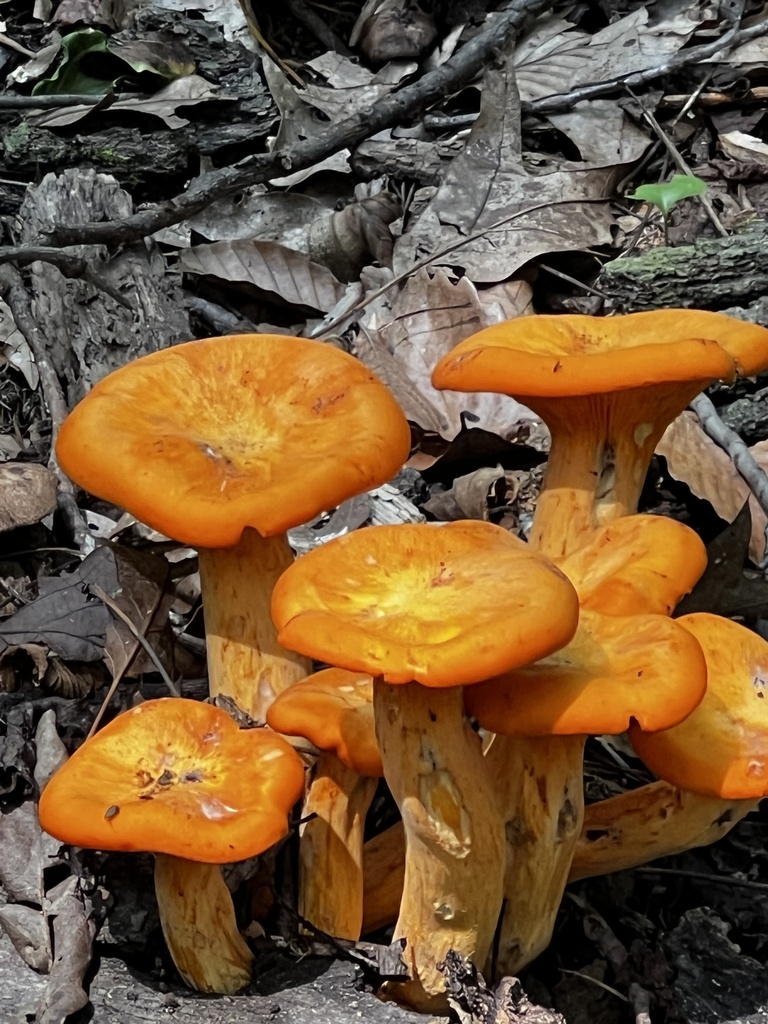
Jack-o'-lanterns are orange from cap to stem and usually grow as tight clusters from stumps, roots, or buried wood. The crowded gills are thin, sharp-edged blades that run down the stem. Cut flesh remains orange rather than exposing the pale, fibrous interior expected in a chanterelle.
Some gills can emit a faint green light in complete darkness after eyes adjust, but many specimens do not glow visibly. Bioluminescence is an interesting confirmation when present, never a required test.
Why it matters
Eating jack-o'-lanterns can cause severe cramps, vomiting, and diarrhea. The eastern North American O. illudens has western, European, and other regional relatives that share the same basic orange, clustered, gilled pattern.
The fungus decomposes buried hardwood, so a cluster may appear to grow from lawn soil even when roots or a stump remain underneath.
Memorable fact
The light is produced in the gills by a chemical reaction involving luciferin and oxygen, similar in principle to other bioluminescent organisms.