Lookalikes to rule out
False Saffron Milk Cap
cautionLactarius deterrimus is associated with spruce and its orange latex reddens before staining green.
Woolly Milk Cap
toxicLactarius torminosus has a woolly cap margin, pale to white acrid latex, and birch association.
Jack-o'-lantern
toxicJack-o'-lanterns grow in fused wood-based clusters and do not bleed colored latex when the gills are cut.
Identification
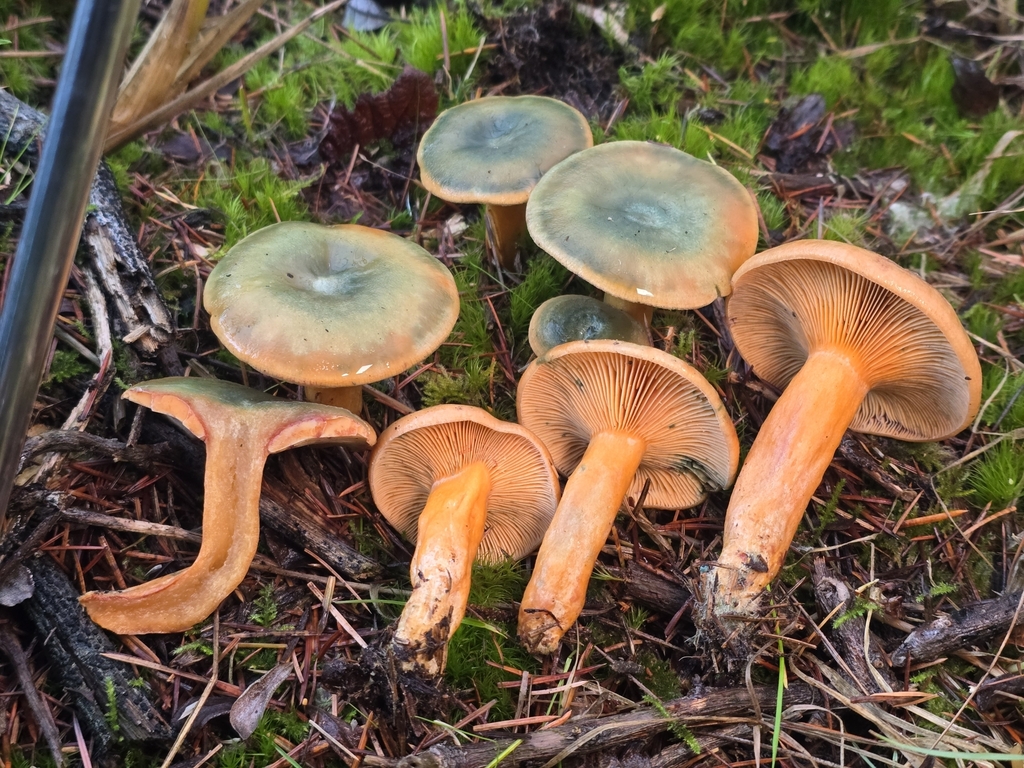
The cap is orange to carrot colored with darker concentric rings, becoming shallowly depressed in the center. Crowded orange gills run down the stem. Cut or press the gills and watch for orange latex; damaged tissue commonly stains green over time. The stem may show shallow orange pits.
Record the host tree. L. deliciosus is associated with pine, but the name has historically been applied to several orange, green-staining milk caps around the world.
Uses and ecology
Members of the correctly identified saffron milk cap group are widely cooked in Europe and other regions where pines have carried them into plantations. Texture and flavor vary by species and age, and acrid or bitter specimens should not be treated as a match.
The orange pigment can temporarily color urine after a meal. That striking but generally harmless effect is separate from gastrointestinal symptoms, which still warrant normal medical judgment.
Memorable fact
The green marks that make an old specimen look spoiled are an oxidation response and an important field clue.