Lookalikes to rule out
King Bolete
harmlessBoletus edulis and related fall-fruiting species are extremely similar; season and region help separate them.
Bitter Bolete
cautionTylopilus species can show pink pores, darker netting, and a bitter taste that ruins a meal.
Blue-staining Boletes
toxicRapid blue staining or red pores do not fit the spring king profile and require separate identification.
Identification
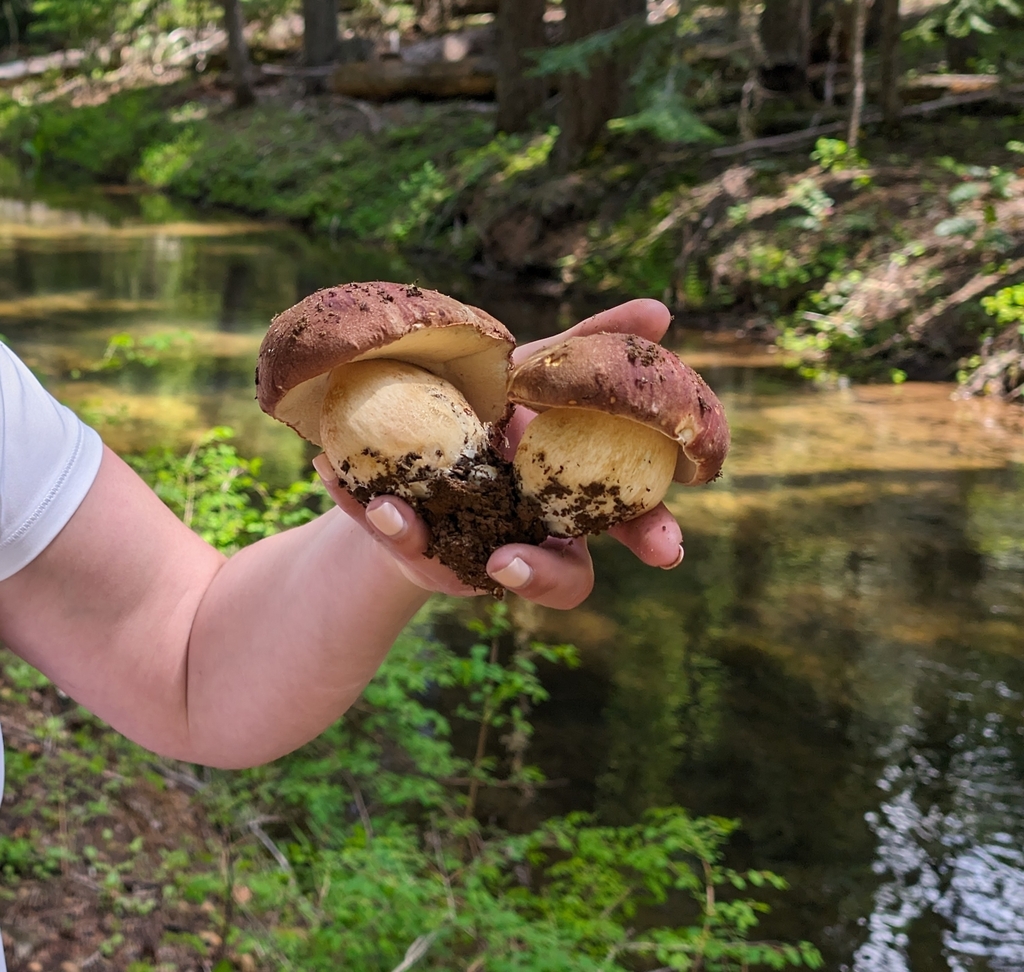
Spring kings are stout boletes with tan to chestnut caps, a thick pale stem, and fine raised netting near the stem apex. The pore layer starts white and becomes yellow to olive with age. White flesh is dense and generally remains unchanged when cut.
Season is unusually useful. This western species appears around snowmelt and spring warming under pines, earlier than many summer and fall porcini. Weather and elevation can still shift fruiting by weeks.
Uses and ecology
Young, firm spring kings are prized cooked or dried. Remove insect-damaged tissue and identify every specimen in a mixed bolete collection. Local harvesting limits and commercial permit rules may apply on public land.
As a mycorrhizal species, it depends on living pine roots. A visible flush is the brief fruiting stage of a much larger underground partnership.
Memorable fact
Its name means spring king, a direct reference to both its season and its place in the porcini group.